Which Bread Should Catch the Wagyu Jus?
Which bread — traditional focaccia or an unlimited popover — soaks up A5 wagyu and roast-beef juices better at the table? At our Iidabashi location, the drippings pooling beneath the signature meats are the true prize of the main course. Choosing the wrong crust either sends that liquid gold running across the porcelain or buries the delicate sweetness of Japanese black beef beneath competing plant fats and coarse salt.
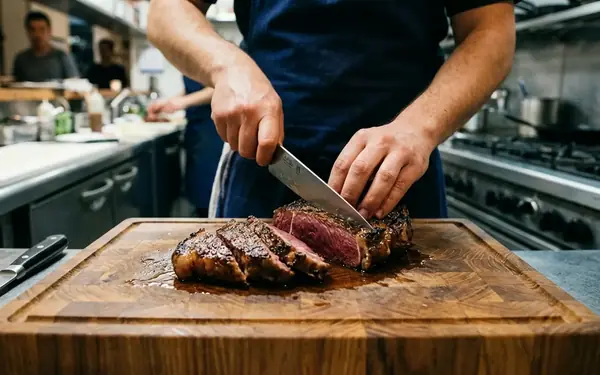
For the roast-beef and A5 wagyu service at this Tokyo trattoria, the choice depends on how each bread handles the meat juices. When carved beef hits a ceramic plate warmed to 55°C, the behavior of rendered fat shapes how you use your fork and bread knife. A5 wagyu intramuscular fat begins melting at a low 25°C to 28°C. At table temperature, it forms a thin, fast-moving liquid pool that behaves nothing like a traditional butter-mounted pan sauce.
Timing governs the entire experience. The first 4 to 6 minutes after carving offer a window to capture these fluid beef drippings before they cool, migrate toward the outer rim of the plate, and begin to thicken. Drawing on kitchen evaluations of warm roast-beef jus and rendered A5 wagyu fat interacting with both crusts on heated ceramic plates, the culinary team judged each loaf by whether its crumb structure trapped liquid fat without masking the sweet aroma of the beef.
How Dimpled Focaccia Meets Hot Wagyu Fat
Traditional Italian hearth bread brings its own culinary personality to the table. Our bakers adjust the hydration and surface dimpling of the house focaccia to create deep surface wells measuring 8 to 12 millimeters deep. While those pockets easily capture chunky condiments alongside pasta at lunch, introducing an oily, salted, and dimpled slab of dough to pure A5 wagyu jus can create a sensory conflict.
The focaccia crumb arrives already saturated with extra-virgin olive oil and topped with coarse sea salt. When you press a torn corner into delicate wagyu drippings, the robust plant lipid clashes directly with the animal fat. That extra oil blurs the beef's clean, lactone-rich sweetness and makes the resulting bite feel noticeably heavier than a slice of the meat alone.
Resting warm focaccia in liquid wagyu fat for 10 to 15 seconds can allow the olive oil trapped in the crumb to leach out and form a separated, two-tone slick right on the plate. Because the dimples are already coated in oil, thin watery jus can overflow the 8-to-12-millimeter wells instead of absorbing into the gluten network. However, that dense chew and open dimpled topography earn their place when the accompanying sauce is thick enough to sit inside the wells rather than running off the edges.
This oil-and-salt conflict applies to the roast-beef and A5 wagyu drippings during the meat course, while the focaccia performs beautifully alongside antipasti or olive-oil-based pasta dishes.
Why a Hollow Popover Drinks the Drippings
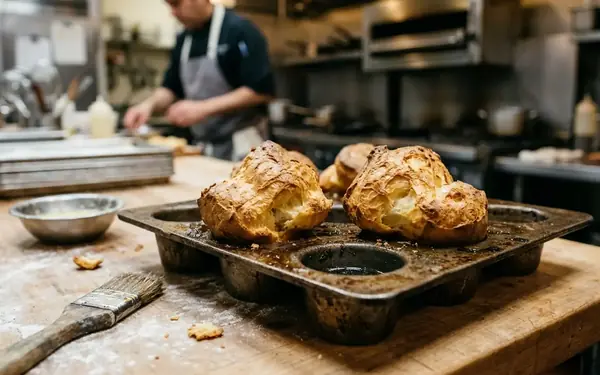
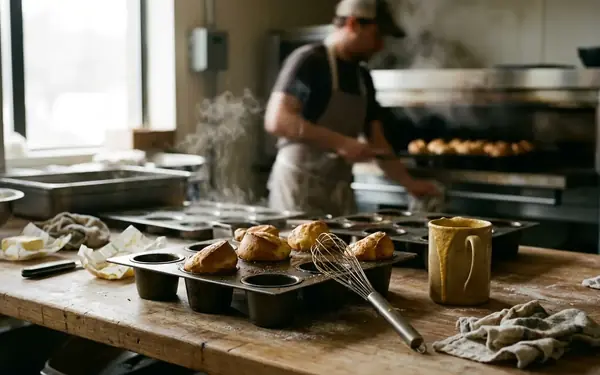
To solve the saturation problem of oiled hearth breads, the pastry station turned to the hollow popover. Early service trials considered serving a single large loaf per table, but the team switched to continuous batch baking during the meat course after observing that cooled shells lost their crispness and absorbed warm drippings less readily. By baking a high-steam egg batter in preheated deep molds at 215°C to 225°C for 28 to 32 minutes, the ovens produce an oversized, steam-leavened cavity surrounded by paper-thin outer walls measuring just 2 to 3 millimeters thick.
The popover's mechanical advantage is that empty center. Torn in half, the thin crisp walls act as an edible cup for hot jus. Because the egg-and-flour batter contains minimal competing fat, the wagyu drippings remain the main flavor rather than mixing into an olive-oil crumb. You taste the caramelization of the roast beef and the sweet melt of the A5 marbling, supported by a neutral, airy crust.
Temperature management keeps this system working. Fresh popovers retain their structural crispness and steam-warmed interior for 5 to 8 minutes after leaving the oven. That brief window suits our popover tradition: unlimited refills are the house service specifically through the roast-beef and A5 wagyu course. Each fresh shell meets the jus while the pastry walls are still crisp and dry. We limit those continuous refills to the meat service rather than the whole meal, keeping oven capacity focused on tables actively carving into their beef.
Thin Jus, Reduced Gravy, and Heavy Meat Sauce
Pairing both breads across three distinct sauce viscosities—pure wagyu run-off, reduced roast-beef gravy, and heavy braised meat ragù—shows where each bread begins to soften or collapse at the table. The kitchen compared them on ceramic plates warmed to 55°C, though dining room drafts near the entrance can shorten these absorption windows.
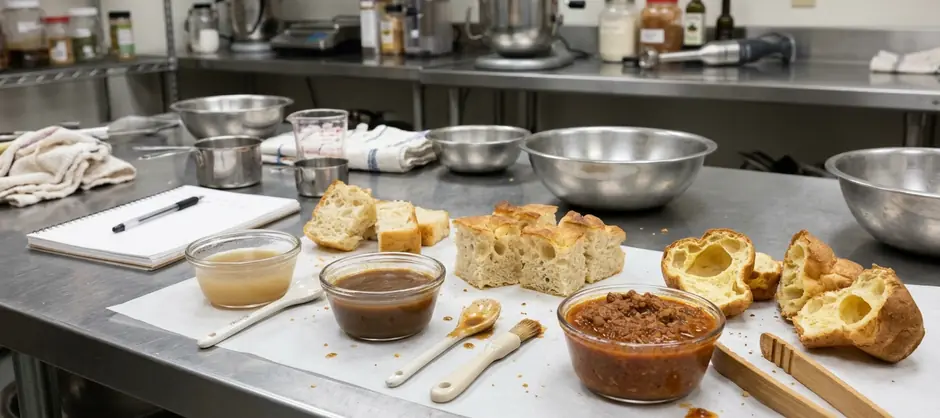
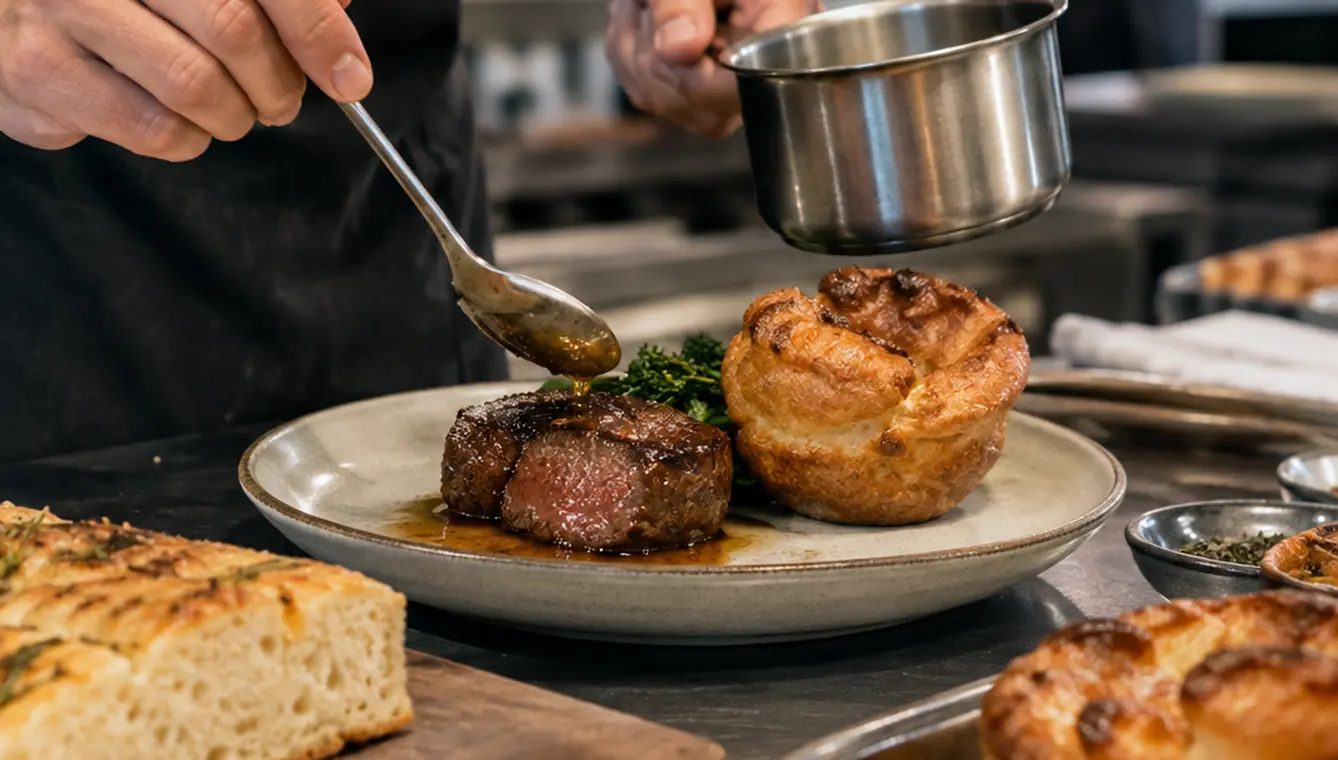
When thin, hot A5 jus pools on the plate, the popover cavity holds it cleanly. Try the same move with focaccia, and the shallow dimples overflow while an olive oil slick floats out onto the beef juice. A torn popover cup can hold thin jus for 15 to 25 seconds before the egg-rich wall softens, so eat it promptly while the bite stays crisp.
Shift the viscosity to a reduced roast-beef gravy that clings to the tine of a fork, and the mechanical advantage flips. If a thin 2-to-3-millimeter popover wall sits in a heavy, gelatinous pool of gravy, the crust can soften into a wet paste. Here, the focaccia's dense chew holds the weight. Its structured crumb can support thick, clinging meat sauces for 2 to 3 minutes on the fork without tearing or losing its bite.
Against a heavy meat sauce or braised ragù, focaccia's structure and internal olive oil match the muscular weight of the reduction. If you still reach for a popover during a heavy ragù course, treat the pastry strictly as a quick scoop for surface juices rather than leaving it in the dish for a long soak.
| Sauce or Dripping Type | Plate Behavior | Recommended Bread | Table Technique |
|---|---|---|---|
| Hot A5 Wagyu Jus | Thin, fast-running liquid fat with sweet, delicate aroma | Hollow Popover | Tear open to vent steam; cup the thin liquid and eat within 15 to 25 seconds |
| Reduced Roast-Beef Gravy | Medium-thick reduction that clings to meat and porcelain | Dimpled Focaccia | Press a torn edge downward so the 8-to-12-millimeter wells load without tearing |
| Heavy Braised Meat Sauce | Dense, high-viscosity ragù with suspended meat fibers | Dimpled Focaccia (or Popover as quick scoop) | Swipe firmly with focaccia crumb, or scoop rapidly with a crisp popover wall |
Tear, Dip, or Cup Before the Plate Cools
Even with the right bread in hand, table technique determines whether you capture the essence of the beef or leave the best flavors stuck to cooling porcelain. During lunch and dinner service, guests sometimes dip whole, untorn popovers directly into the center of the meat plate, flattening the pastry dome and pushing the valuable jus outward toward the cold rim.
As plate temperature drops below 35°C, the tallow and rendered wagyu fat can begin to cloud, thicken, and coat the palate with a waxy film. This can happen within 8 to 10 minutes after the beef is served. A deliberate sequence helps you catch the juices while they are still fluid.
- Inspect and Taste First: Take less than 5 seconds as the server sets down the carved A5 wagyu and roast beef to check the liquid run-off. Taste a drop of the natural reduction on the tip of your knife to gauge the baseline salt level before introducing salted bread.
- Vent the Popover Immediately: If the jus is running thin, grab a warm popover and tear the shell open within 30 to 45 seconds of table delivery. Venting that trapped interior steam helps keep the 2-to-3-millimeter crust crisp when it meets hot liquid.
- Cup, Do Not Wipe: Use the curved hollow of the torn popover like a spoon. Dip the edge into the warm pool, let the thin jus run into the dry egg cavity, and eat it before the shell softens.
- Load Focaccia Vertically: When facing thick gravy, tear a bite-sized piece of focaccia and press the torn edge straight down into the sauce so the deep dimples load up. Pull the bread away before a 10-to-15-second soak allows oil from the crumb to spread onto the plate.
Finish soaking up pure A5 wagyu drippings before the 8-to-10-minute mark, while the plate is still warm and the fat remains fluid rather than waiting for it to fall below 35°C.
When the Olive Oil in the Crumb Is the Point
With unlimited popovers arriving warm from the ovens at both our main dining room and across our sister restaurants, diners sometimes treat the airy pastry as a universal replacement for Italian hearth bread. Yet the kitchen maintains clear pairing boundaries based on fat temperature and sauce thickness. When a dish relies on the peppery bite of extra-virgin olive oil or features a heavily reduced, gelatin-rich glaze, the neutral egg profile of a popover leaves the bite feeling hollow.
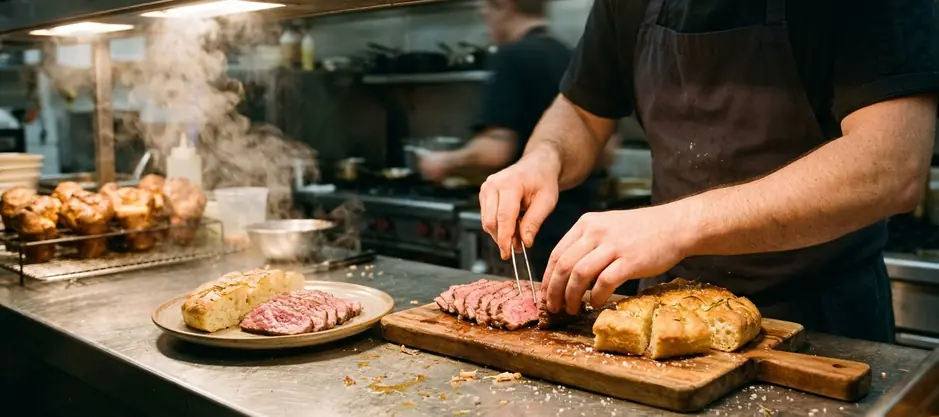
Choose focaccia when salt, olive oil, and structural chew should be an active part of the bite. The coarse sea salt crystals baked onto the focaccia crust dissolve over 3 to 5 seconds on the tongue, cutting straight through heavy, gelatinous meat glazes that would otherwise overwhelm the palate. Its ability to carry dense ragù makes it indispensable when the sauce is built on olive oil and long-simmered collagen.
Conversely, keep the focaccia off the plate when the wagyu jus should stay untouched by plant lipids, and avoid combining solidifying beef fat with an oil-soaked focaccia crumb after the 10-minute cooling mark, as that pairing can create a heavy lipid coating on the tongue. Popovers remain the dedicated house tool for soaking rich, fluid beef drippings; they do not replace focaccia when the sauce is already thick and clinging. This distinction applies to the roast beef, A5 wagyu juices, and heavy meat sauces at this table, rather than setting a rigid ranking for antipasti or seafood courses.
Which Piece Do You Break First?
Reach for the hollow popover to cup thin, hot wagyu jus, and grab the dimpled focaccia when a thick sauce needs structural chew and you want peppery olive oil and sea salt in the bite.
Rather than issuing a rigid house rule, our kitchen structures the table presentation so both breads arrive warm alongside the freshly carved beef. Breaking your first piece of bread within 1 to 2 minutes of plating lets the crust meet the drippings while they are still warm and fluid, with the A5 fat still shimmering above its 25°C to 28°C melting point.
Looking at the jus pooling on the warm ceramic plate in front of you right now — thin and running, or thick and clinging, which piece do you break first?