Gran Bocca’s Wagyu skirt steak works because the kitchen treats a humble, hard-working muscle with the same discipline usually reserved for showpiece cuts. The dish is not built around softness alone. It depends on grain, heat, fat behavior, and a narrow service window that leaves little room for improvisation.
That is where the cut becomes interesting. Skirt steak brings chew and direction. A5 Wagyu brings intramuscular fat that melts early, coats the fibers, and pushes sweetness into the first bite. The craft sits in keeping those two traits in balance rather than letting one erase the other.
What makes skirt steak a standout cut?
Coarse grain gives the grill something to hold
During our visit, the most useful detail was not the marbling score or the plate presentation. It was the muscle grain. Skirt steak carries coarse fiber bundles measuring roughly 2 to 3 millimeters in thickness, which gives the surface enough structure to take direct heat without collapsing into softness. Tenderloin may read as luxurious, but it does not grip smoke and crust in the same direct way.
That coarse grain also explains why the cut belongs naturally beside older Tuscan and Roman butchery habits. Those traditions gave value to working muscles, not because they were easy, but because they rewarded a cook who understood slicing, fire, and seasoning. Skirt steak fits that lineage. It asks for heat, a sharp knife, and restraint.
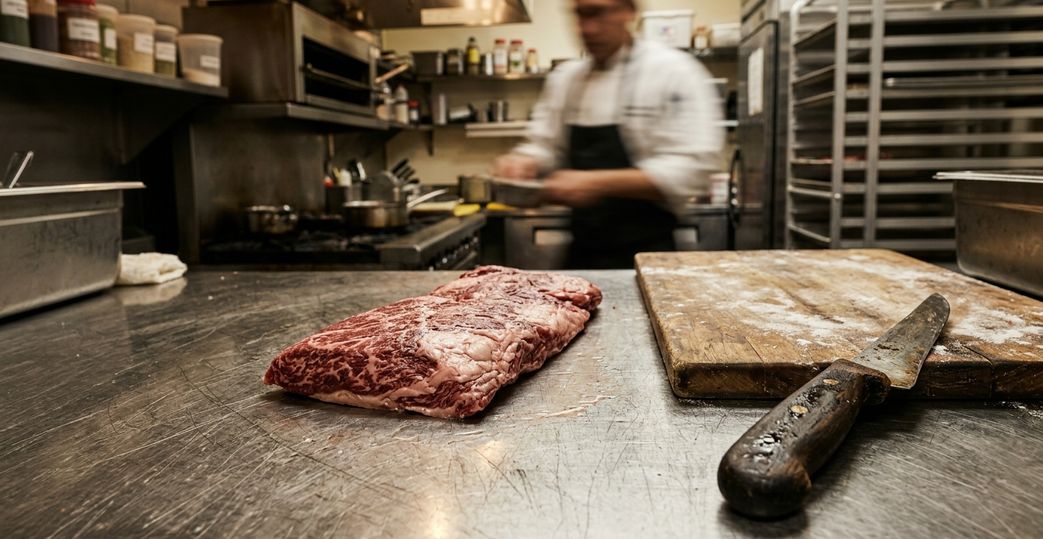
With Wagyu, the calculation changes again. The intramuscular fat melts somewhere around 25°C to 28°C, well before the steak reaches a finished serving temperature. On a lean skirt steak, the cook often fights toughness. On Gran Bocca’s Wagyu version, the cook fights excess richness while preserving the cut’s natural pull.
Key Takeaway: Skirt steak stands out here because its coarse fibers create contrast. The Wagyu fat supplies gloss and sweetness, but the grain keeps the bite from becoming one-note.
Why not tenderloin?
Tenderloin has prestige, but prestige does not always make the better plate. Its fine texture can turn too uniform when paired with A5-level marbling. Skirt steak gives the fat somewhere to go: into seams, across ridges, and along slices cut against the grain.
That is the practical answer. The cut does not simply carry Wagyu marbling. It frames it.
Where does Gran Bocca source its Wagyu?
Kyushu ranch relationships shape the dish before it reaches the kitchen
Gran Bocca sources through direct contracts with specific Kyushu breeders for A5-certified animals. Those relationships matter because the steak depends on consistency before any chef touches the grill. The cattle are raised through feeding cycles lasting approximately 28 to 32 months, with a diet that includes roasted soybeans and rice straw.
The procurement standard focuses on intramuscular fat scores strictly between 8 and 10. That range gives the kitchen enough richness for the signature style while avoiding a plate that tastes only of fat. In this context, the numbers matter most as guardrails for this dish, not as a universal ranking of skirt steak quality.
Seasonality still has a voice. The mineral flavor profile varies depending on whether the Kyushu cattle were harvested in the spring or late autumn. Spring lots can feel cleaner and brighter on the finish, while late-autumn lots tend to carry a deeper mineral impression once the smoke and salt settle. The kitchen does not flatten that difference; it lets the nightly cut speak within the house preparation.
Traceability is part of service, not theater
Traceability records are shared with diners upon request. That record-keeping is useful because A5 Wagyu can become vague language on menus when no one explains the animal, region, or selection range behind it. Gran Bocca ties the claim to Kyushu sourcing, breeder relationships, feed detail, and the intramuscular fat score used for selection.
This dish suits diners who want more than tenderness. It suits someone who notices whether fat tastes sweet, whether smoke sits on the surface or penetrates the cut, and whether a steak still has structure after the first bite. If the goal is a large, lean, char-heavy steakhouse portion, this is the wrong target.
Pro Tip: Ask about the current Kyushu lot before ordering. The answer will tell you more about the expected finish than a generic description of A5 marbling.
How is the steak aged and cooked?
The aging window tightens the texture
The kitchen aims for something like a 21-day dry-aging profile within a controlled range of 18 to 22 days. The chamber sits at approximately 2°C, with ambient humidity held around 80%. Those conditions concentrate flavor without pushing the skirt steak into the leathery edge that can come from longer aging on a thin, open-grained cut.
Dry aging does not make this steak taste old. It makes the beef taste more focused. Moisture loss tightens the exterior, the fat holds a cleaner aroma, and the muscle fibers gain enough firmness to survive the heat that follows.
Binchotan solves the crust problem
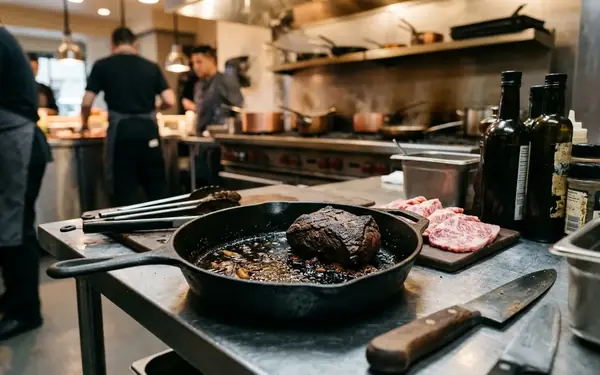
The kitchen first tested a standard gas broiler. The broiler delivered heat, but its ambient moisture slowed the sear and softened the surface before a proper crust could form. That was the wrong kind of heat for a cut with fat that begins melting so early.
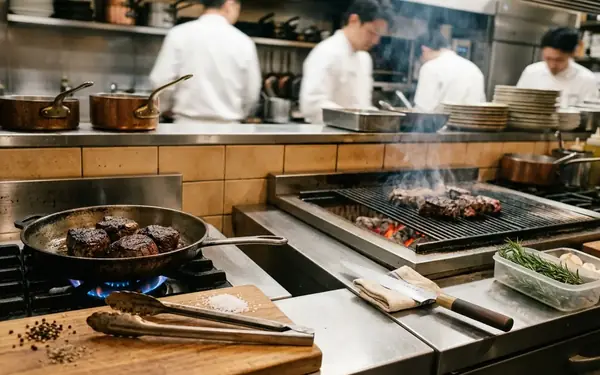
The better tool is a custom-built binchotan grill. Binchotan charcoal burns at roughly 640°C to 660°C, giving the kitchen a working target around 650°C for fast crust formation. The heat feels dry and direct, with infrared intensity that marks the exterior before the interior loses its shape.
That precision matters. A5 skirt steak can go from lush to greasy quickly if the cook lets rendered fat run out unchecked. The grill must set the surface, warm the center, and protect the muscle’s coarse architecture at the same time.
Resting is not optional
After grilling, the steak rests for roughly 6 to 8 minutes on a warm ceramic plate. If the steak is not rested for that full 6-to-8-minute window, the rendered Wagyu fat pools on the plate rather than reabsorbing into the muscle fibers. This is one of the quiet service details that separates a polished plate from a rich but slack one.
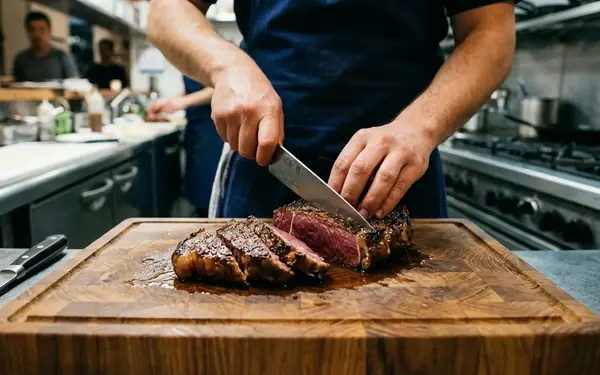
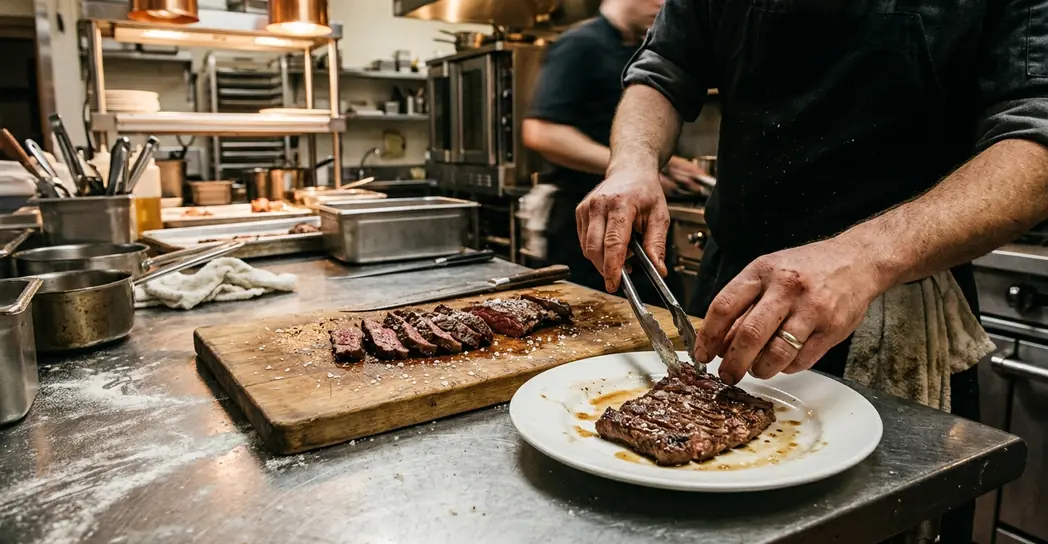
The final seasoning stays direct: coarse Sicilian sea salt, applied to sharpen the fat and lift the beef’s mineral notes. The steak is then sliced at about a 45-degree angle into more or less 12-millimeter-thick strips. That angle shortens the chew while preserving enough thickness for the grain to register.
What does the finished dish taste like?
Richness arrives first, then the mineral line
The first impression is rendered fat. It lands quickly because the Wagyu marbling has already softened by the time the steak reaches the table. The second impression is more important: mineral depth from the beef, salt, and aging, running underneath the sweetness instead of being buried by it.
The smoke stays measured. Binchotan does not turn the steak into a charcoal statement. It gives the crust a dry, clean bitterness that cuts the fat, then steps back. The coarse Sicilian sea salt does similar work, creating sharp points across the slices rather than coating the meat evenly.
The aged balsamic reduction brings acidity into the plate. It is not there to make the steak taste Italian by force. It is there because A5 skirt steak needs a counterweight, and acid gives the palate a clean edge between bites.
Portion size protects the experience
Gran Bocca keeps the portion somewhere around 140 to 160 grams. That can sound modest to a diner expecting a conventional steak order, but the size fits the material. A larger serving would dull the contrast between smoke, salt, sweetness, and mineral finish.
The dish works best when treated as a concentrated course rather than a volume play. The same 12-millimeter slices create a steady rhythm: crust, fat, grain, acid, salt. One specific bite shows the design clearly: an end slice with a browned edge, a small drag through the balsamic reduction, and just enough sea salt to crackle before the beef sweetness fills in.
That is the plate at its strongest.
What are the boundaries of this preparation?
Scarcity supports control
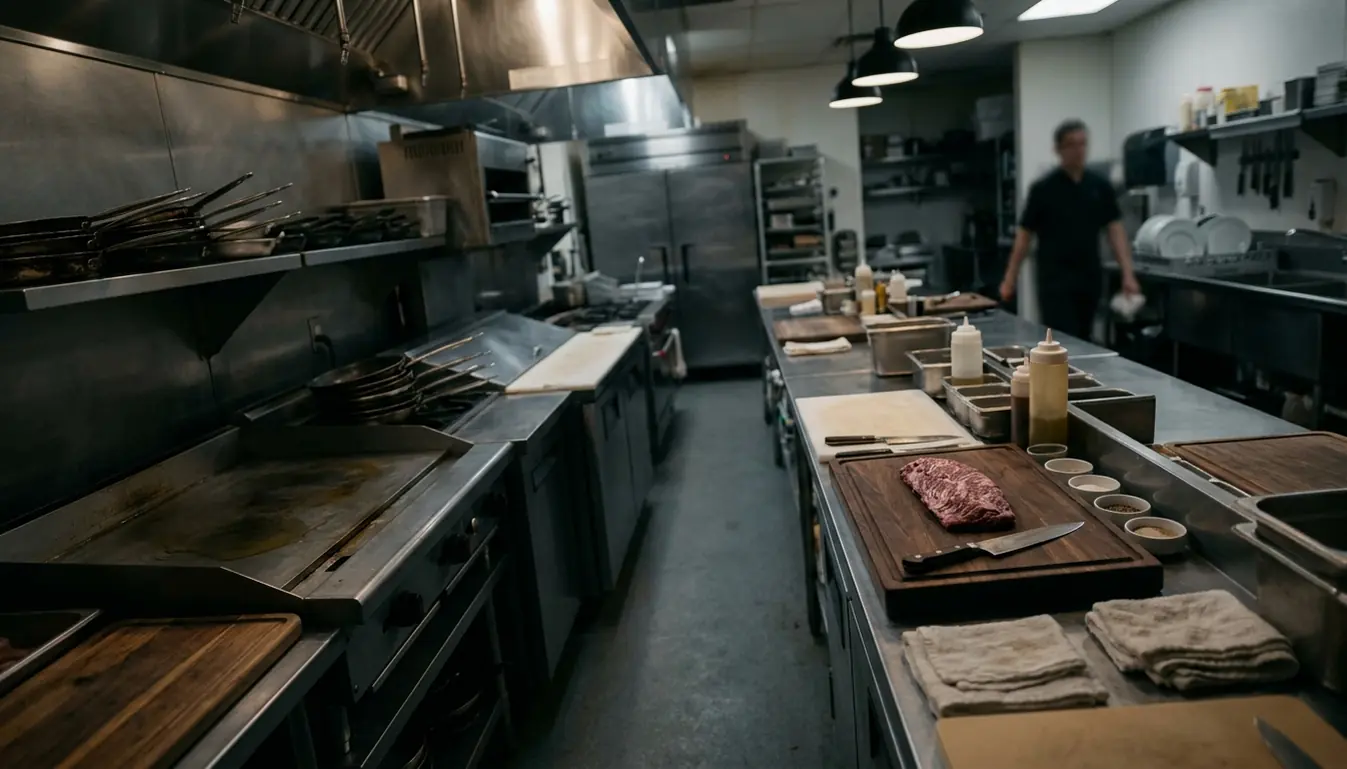
Gran Bocca limits the dish to 12 portions per dinner service. The reason is not scarcity for its own sake. Managing this cut over binchotan requires constant chef supervision, especially because the fat renders early and the crust forms fast.
The limit also reflects seasonal Wagyu supply. Direct Kyushu sourcing, intramuscular fat score selection, and the 18-to-22-day aging window narrow what the kitchen can serve on any given night. If the current lot does not match the dish, the preparation should not stretch to cover the gap.
It should not be judged like non-Wagyu skirt steak
This preparation is not intended for comparison with non-Wagyu skirt steak. The category may share a muscle name, but the cooking logic differs. A lean skirt steak often needs marinade, aggressive slicing, and a different relationship with doneness. Gran Bocca’s version depends on marbling, controlled aging, dry heat, and a short rest window.
It also does not belong in every Roman-style application. The intense marbling and specific aging profile mean this Wagyu cut cannot be substituted into traditional braised Roman dishes without the fat completely dissolving and damaging the sauce’s texture. The steak succeeds because the kitchen keeps it close to fire and away from long, wet cooking.
Warning: Do not read this dish as a universal upgrade to skirt steak. It is a narrow preparation built for A5 Wagyu, binchotan heat, and a tightly controlled serving size.
The boundaries make the dish more honest. Gran Bocca is not trying to prove that every skirt steak should taste like this. It is showing what happens when Roman butchery logic, Kyushu Wagyu sourcing, and Italian seasoning discipline meet on one carefully supervised grill.