Adapting the Trattoria Hearth for Tokyo Dining Rooms
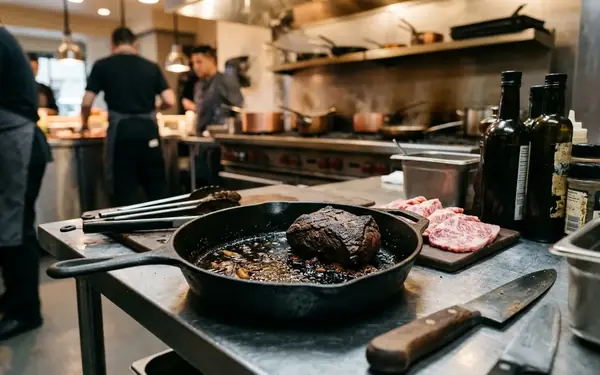
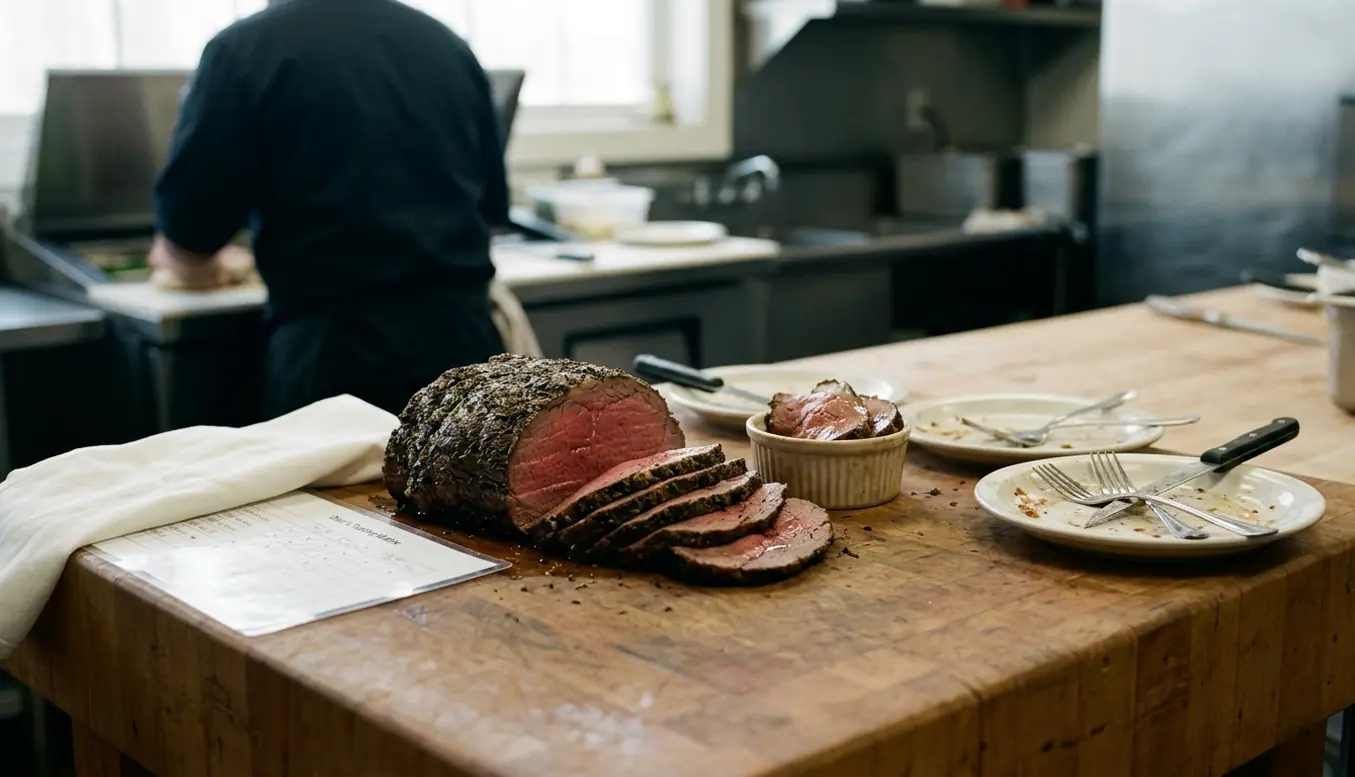
The trattoria habit of roasting a whole joint with rosemary, garlic, and pan juices carries a specific rustic weight. Bringing that method into Tokyo dining rooms required navigating a culture that already prized beef in entirely different formats. At Gran Bocca, the ovens are calibrated between 135°C and 142°C to mimic traditional trattoria hearths. This heat keeps the center pink while the crust develops a deep, savory bark.
The meat undergoes an initial resting phase of 45 to 55 minutes before the first slice is drawn.
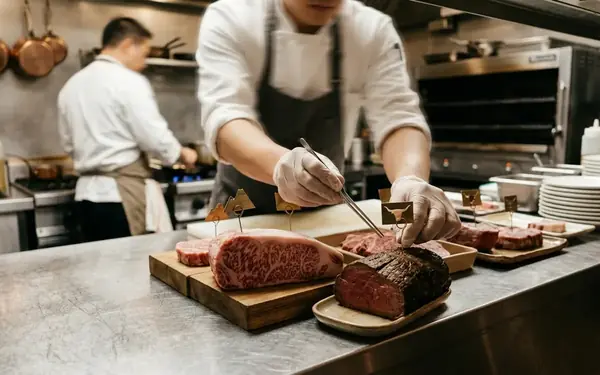
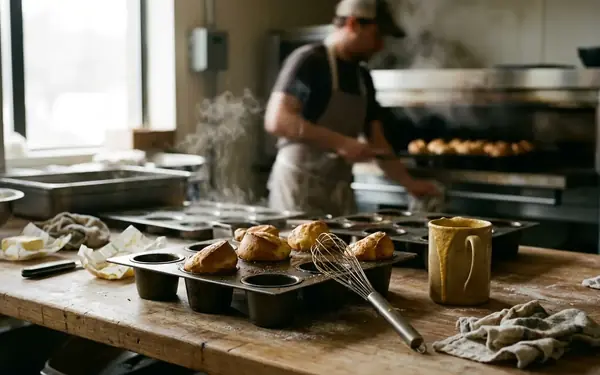
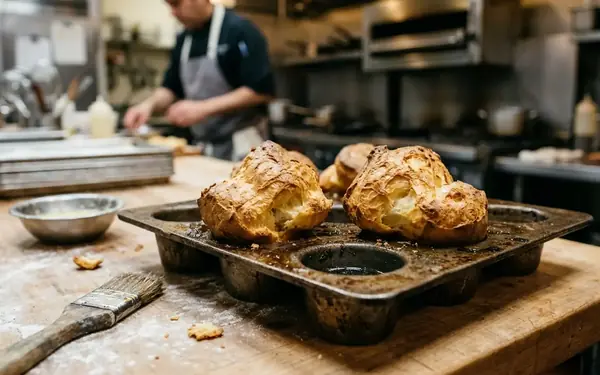
Japanese cattle culture made A5 wagyu available on the same carving board as lean red-meat roasts. Diners inherited two very different Italian roast experiences. The roast method stayed Italian. The muscle and fat on the board changed completely. The Iidabashi location built its reputation on this intersection of traditional technique and premium local sourcing. Guests arrive expecting the familiar warmth of the popover tradition, only to find themselves choosing between two distinct expressions of roasted beef.
Heat transfer behaves differently depending on the density of the muscle fibers and the volume of intramuscular fat. A slow roast allows the connective tissues in a lean joint to break down gradually, creating a tender bite without sacrificing the structural integrity of the meat. When applied to highly marbled cuts, that same slow heat initiates a different physical reaction. The kitchen must manage these outcomes simultaneously, ensuring that both cuts reflect the core principles of Italian meat cookery.
The Carving Board Collision Between Muscle and Marbling
A pink-centered Italian roast can be carved from a lean joint or from highly marbled A5 wagyu. They eat as entirely separate disciplines. Prestige, price, and marbling photographs pull diners toward the A5 option. Herb jus, chew, and wine often favor the lean muscle. The decision at the table dictates the progression of the meal.
Chefs initially tested serving both cuts on a single shared platter. The ambient heat caused the A5 fat to bleed into the lean roast's herb jus, muddying the distinct flavor profiles. The kitchen ultimately decided to separate the carving boards to preserve the integrity of each muscle type.
Carving board surface temperatures are held between 38°C and 42°C to prevent ambient fat coagulation. The service window remains a tight 3 to 5 minutes from carving to plating. Palate, texture, and the glass decide the progression of the meal, rather than a single superior roast. Managing two separate carving stations requires close coordination during peak service hours. Timing at the pass is critical.
Preserving the Herb Jus Integrity
Keeping the rosemary pan jus on the lean joint's carving board prevents the delicate A5 slices from becoming overwhelmed by robust herbal notes. Each cut retains its intended flavor profile.
The Mechanics of Lean Red Meat Under Rosemary and Garlic
Lean roast texture relies on a long muscle grain and a clean slice. The teeth meet a resistance that reads immediately as roast beef. Flavor remains sharply defined. Rosemary, garlic, the browned crust, and watery-savory jus stay audible because intramuscular fat is not coating the tongue. The sensory experience is grounded in the traditional trattoria style, where the quality of the herbs and the depth of the pan drippings take center stage.
The kitchen targets an internal joint temperature of 52°C to 54°C for lean texture.
Slices are portioned at 4.5mm to 5.5mm thick to retain their juices. Lean joints forgive a slightly firmer carve. They take horseradish, salsa verde, or pan drippings without turning greasy. This approach mirrors the lunch service economics seen across sister restaurants, where consistency and robust flavor drive the daily pasta and lunches crowd. The lean roast provides a satisfying, substantial chew that anchors the meal.
Collagen conversion in lean meat requires time and controlled heat. The 52°C to 54°C internal temperature window allows the proteins to set gently, retaining moisture while achieving the desired pink center. The resulting texture is firm yet yielding, giving the aromatic crust room to shine. The watery-savory jus, extracted from the roasting pan, seasons the beef without masking its flavor.
Rendering Intramuscular Fat in a Slow-Cooked Wagyu Joint
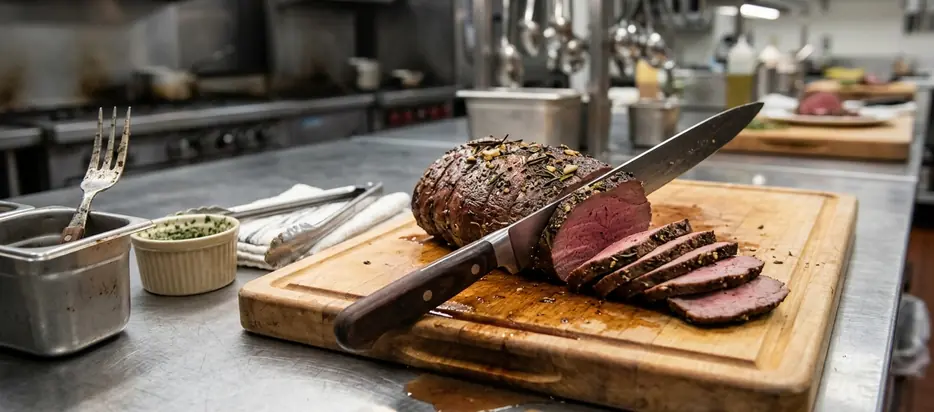
Roast heat transforms dense A5 marbling. Intramuscular fat begins softening rapidly at 24°C to 28°C. It beads and can flood the slice, causing the Italian crust and herbs to recede. A slow roast operates on different principles than a hot-pan steakhouse sear. A5 here is judged on melt, sweetness, and how much fat the diner wants in each bite.
To mitigate palate fatigue, A5 slices are cut to 2.0mm to 2.5mm thick.
A5 roast beef remains Italian in its seasoning and carve, though it represents a narrower pleasure—best in thinner slices, cooler on the tongue, and in smaller portions. The volume of rendered fat requires a delicate touch from the carver. The knife must glide through the meat without applying excessive pressure, which would force the softened fat out of the muscle fibers. The resulting slice is fragile, almost translucent in places, and demands immediate consumption before the fat begins to congeal.
The low melting point of A5's intramuscular fat means that the meat begins to change texture the moment it hits the warm carving board. On the palate, fat turns from solid to liquid, creating a rich, coating mouthfeel that contrasts with the clean finish of the lean roast. This richness requires careful pacing and accompaniments to maintain balance throughout the course.
Mapping Chew, Jus, and Finish Across Two Distinct Roasts
Diners navigate four tasting axes: chew, jus, aroma, and finish. Lean offers distinct muscle grain requiring active chewing. A5 provides immediate melt with minimal resistance. Lean delivers herb-forward, watery-savory pan drippings. A5 presents a fat-glossed, rich coating. Lean highlights rosemary and garlic. A5 emphasizes buttery sweetness. Lean leaves a clean palate; A5 leaves a lingering richness.
Tasting intervals of 3 to 4 minutes are recommended between the lean and A5 slices.
A salsa verde, balanced at a pH of 3.4 to 3.6, cuts through residual oils. From the pass, the rule is strict: lean wants a slightly thicker slice to stay juicy, while A5 demands a thinner slice so marbling does not saturate the mouth. Differentiating the 4.5mm lean slice chew from the 2.0mm A5 melt requires the diner to adjust their expectations with each bite. The physical act of eating changes between the two cuts.
Side-by-Side Tasting Matrix
- Chew: Distinct muscle grain requiring active chewing (Lean) versus immediate melt with minimal resistance (A5).
- Jus: Herb-forward, watery-savory pan drippings (Lean) versus a fat-glossed, rich coating (A5).
- Aroma: Rosemary and garlic dominance (Lean) versus buttery sweetness (A5).
- Finish: Clean palate (Lean) versus lingering richness (A5).
Pouring High-Acid Reds Against Rendered Marbling
Lean Italian roast beef matches well with wines that lift the jus. Sangiovese, Barbera, and other high-acid reds cut through the rosemary and browned crust. These wines are served at 16°C to 18°C to maintain structural grip against the crust. The acidity cleanses the palate, preparing the mouth for the next bite of savory meat and herbs.
A5 roast requires wines that can stand up to fat without adding extra oak heat.
Nebbiolo with age or a restrained Barolo works well, poured in smaller glasses beside the thinner slices. Glassware is swapped within 60 to 90 seconds of transitioning from lean to A5 cuts. Highly tannic young vintages alongside A5 wagyu roast beef can leave a harsh, metallic finish on the palate as the rendered fat strips the wine of its fruit characteristics. The same bottle feels lively and integrated alongside the lean roast.
Tannins bind to proteins, which is why they work well with the structured muscle fibers of the lean roast. The liquid fat in the A5 slice, however, coats the palate and prevents the tannins from binding as effectively. This leaves the astringency of the wine exposed, creating the metallic clash. A wine with resolved tannins and elevated acidity complements the richness of the wagyu rather than fighting it.
Executing a Split-Service Order at the Table
Consider a table of two diners sharing an Italian roast service without mixing the juices on one plate. One diner prefers a lean-and-Chianti palate; the other favors an A5-and-Nebbiolo profile. The kitchen staggers the lean and A5 presentations by 8 to 12 minutes. This pacing lets each cut arrive at its intended serving temperature.
Ask the carver for the lean roast in slightly thicker slices with salsa verde on the side. Request the A5 in thin slices, lightly seasoned, with no extra oil. Taste the lean roast first. Palate-cleansing water, poured at 10°C to 12°C, bridges the gap between plates. Ask the server about the doneness of the joint, whether the A5 is roasted as a small end or a full roast, and confirm that the pan juices are from the lean joint to keep them off the A5. The thicker lean slices arrive with their herb jus; the thin A5 slices follow without extra oil.