Sakura Terrace did not elevate Iidabashi meat dining by acting like a larger restaurant. It did the opposite: it accepted the limits of a small Tokyo terrace, then made those limits legible to guests through meat, timing, and ritual.
That sounds simple from a distance. In Iidabashi, it was a sharper wager. Within approximately two kilometers of the transit hub, more than three dozen established Italian venues already competed for regulars, office dinners, and weekend reservations. Another pasta-led room could have blended into that field by its second season.
The culinary team read the neighborhood correctly. Competing on familiar pasta dishes would have diluted the identity of the terrace, so the concept moved toward a narrower question: could an Italian dining room in Iidabashi become known first for meat?
A Single Terrace That Changed Local Expectations
The risk of sounding familiar
Iidabashi rewards reliability, but it does not forgive vagueness. A restaurant can serve a graceful plate of tagliatelle and still disappear into the evening traffic if guests cannot explain why they should return. That was the central tension facing Sakura Terrace. The neighborhood did not need another polite Italian option; it needed a reason to cross the street.
The terrace format gave the restaurant visibility, yet visibility can expose weak positioning. Diners walking past could see the room before they knew the menu. If the offer looked interchangeable, the terrace became scenery rather than a signal.
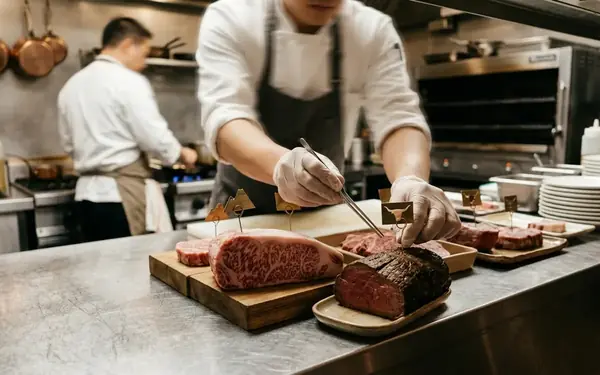
So the team treated meat as architecture. Dry-aged cuts, slow-cooked portions, carving rhythm, and the first view into the restaurant all worked together. This was not a steakhouse imitation placed inside an Italian frame. It was a narrower, more disciplined reading of Italian hospitality under Tokyo constraints.
A neighborhood case, not a universal model
During our visit, the strongest impression came before the first plate: the restaurant placed its argument where guests could see it. The meat program did not sit behind menu language. It occupied the room.
That matters in a saturated dining district. A promise printed on paper competes with every other promise. A visible process changes the conversation. Guests enter with a sense that the restaurant has already committed its floor plan, its labor, and its purchasing to a specific idea.
Key Takeaway: Sakura Terrace succeeded because it made a narrow proposition visible. In a crowded Italian market, the room told guests what the kitchen cared about before the server had to explain it.
The Core Challenge: Space, Sourcing, and Skeptical Diners
The kitchen could not absorb waste
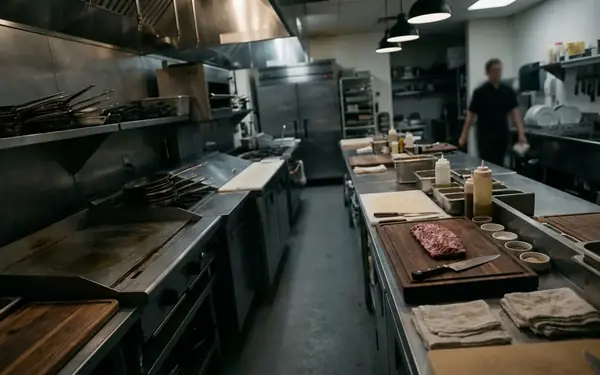
The practical constraint was severe: the kitchen footprint measured something like 12 to 14 square meters. That kind of space punishes romantic cooking plans. Every tray, carving board, pan, and holding point needs a reason to exist.
A large kitchen can hide inefficiency with extra stations. Sakura Terrace could not. The team needed a workflow that protected service pace while leaving enough visible activity to support the terrace’s identity. The room had to feel generous, but the back-of-house mathematics stayed tight.
This is where many meat-led concepts lose control. They buy impressive cuts, then discover that trimming, resting, carving, and re-firing create traffic jams during peak service. In a small Iidabashi kitchen, one overloaded station can slow the whole room.
Domestic sourcing had to match the aging plan
The sourcing problem ran deeper than price or availability. The team mapped domestic ranches that could provide whole cuts suited to extended dry-aging, because standard pre-portioned cuts lacked the exterior fat and structural tolerance needed for the program.
Attempting to dry-age standard commercial beef without a sufficient exterior fat layer can lead to excessive moisture loss and unservable product. That is not a theoretical kitchen-school warning. It is the difference between a profitable signature dish and a costly display of ambition.
Transport added another layer. The cold chain had to remain within somewhere around 1°C to 2°C, which narrowed the pool of workable suppliers. Consistency, not novelty, became the governing value.
The diner expectation was lighter
Iidabashi diners often associate Italian meals with seafood, vegetables, pasta, and a moderate pace suited to after-work dining. A meat-centered program risked looking too heavy, especially for guests expecting the breezy ease of a terrace meal.
The restaurant could not simply push larger portions and call it generosity. It had to make meat feel precise, paced, and shareable without losing the depth that justified the concept.
Warning: A meat program in a compact Italian restaurant fails quickly when sourcing, trimming loss, and service timing get treated as separate problems. At Sakura Terrace, they were one operating problem.
Solution: Heritage Techniques Applied to Tokyo Constraints
The grill that did not fit the room
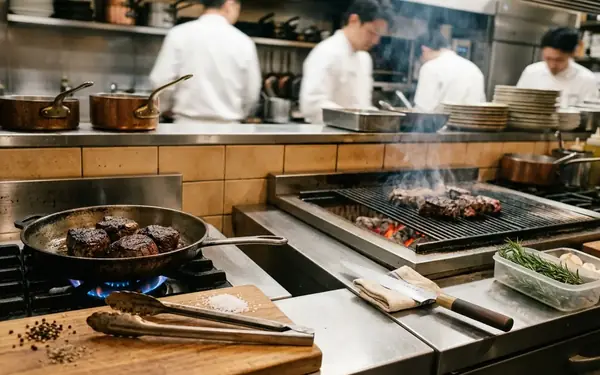
The kitchen first tested a traditional open-hearth wood grill for the main dining room. The idea had culinary appeal: fire, smoke, spectacle, and a clear connection to older meat traditions. It also had the wrong physics for the terrace.
The smoke output overwhelmed the terrace’s ambient airflow. Rather than force the room to endure the romance of live fire, the team abandoned that path and built a more controlled method around dry-aging, slow cooking, cast iron, and carving discipline. This is the one failed experiment worth noting because it shaped the final language of the restaurant.
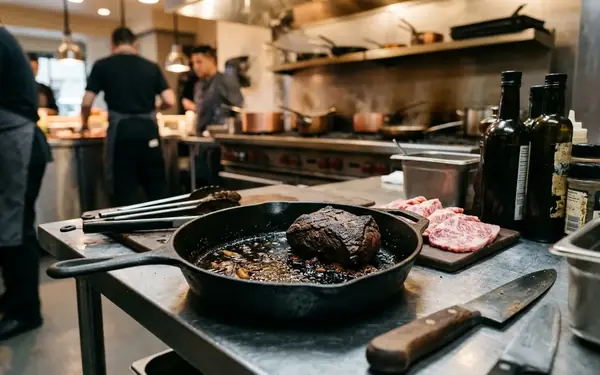
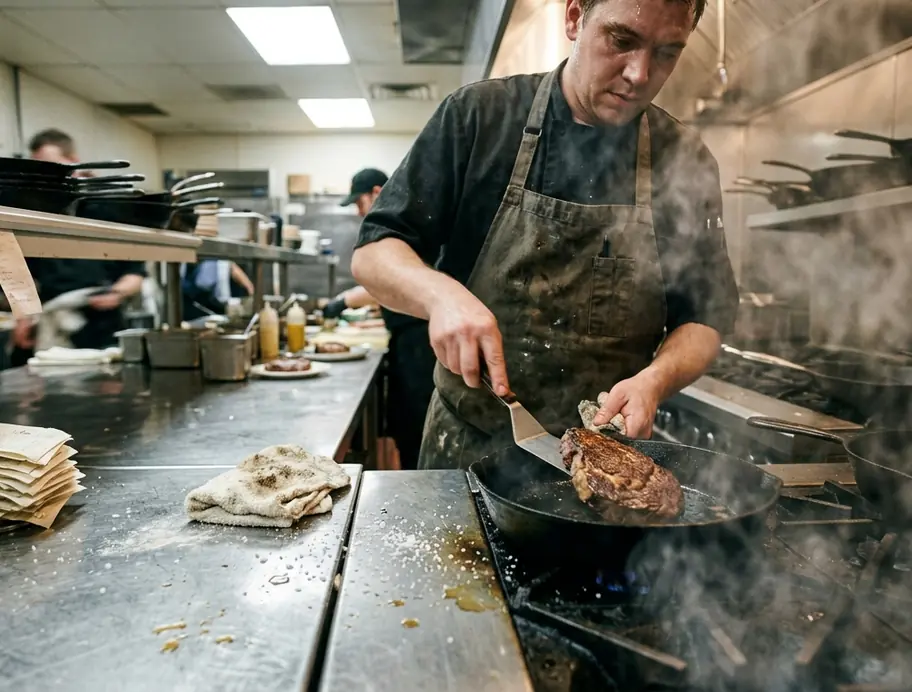
The better alternative kept the flavor ambition while respecting the site. Dry-aged cuts developed concentration before service. Low-temperature preparation protected doneness. Cast iron delivered the final sear without turning the dining room into a smoke chamber.
Aging, resting, and seasoning became the grammar
The dry-aging cycle settled into more or less a 35-to-42-day window. That range gave the beef enough time to develop depth without pushing it into a more aggressive profile that might alienate diners seeking a refined Italian meal rather than a specialist beef counter.
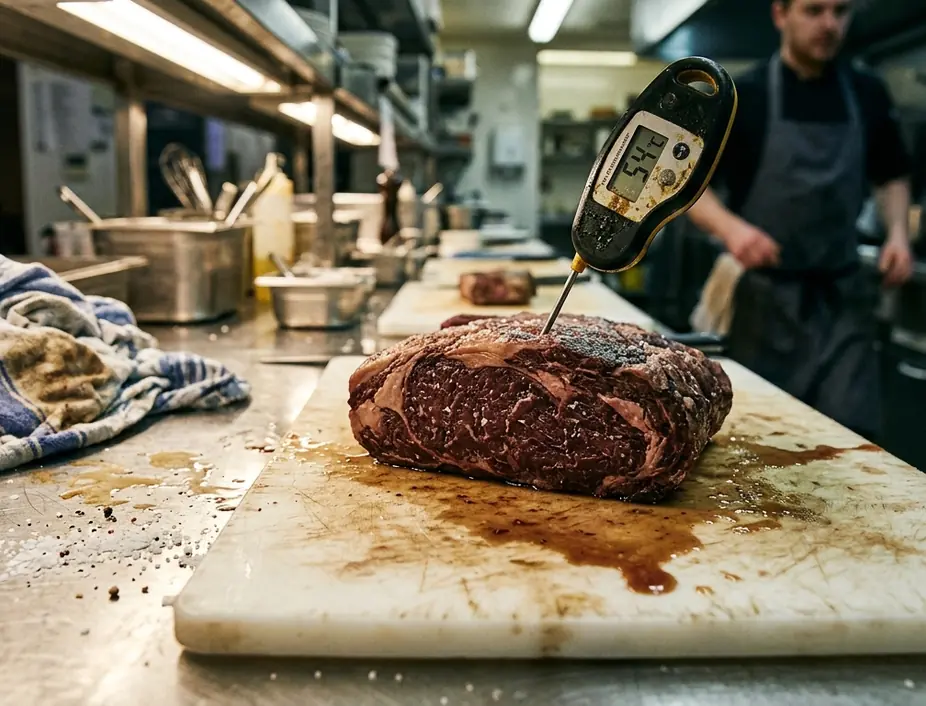
Core resting temperatures in the mid-50s°C range gave the carving station a narrow band of control. The team also adjusted the resting period of the meat based on the ambient humidity of the terrace during Tokyo’s distinct seasonal shifts. That seasonal adjustment sounds small, but it is the kind of detail that keeps texture steady from one visit to the next.
Seasoning choices followed the same logic. The kitchen avoided masking the aging work. Salt, heat, rest, and fat did most of the speaking.
Core meat program specifications
Core Meat Program Specifications| Cut Profile | Preparation Technique | Target Aging Window |
|---|---|---|
| Bone-in Ribeye | Low-temperature bath to cast-iron sear | Same aging window |
| Chuck Flap | Extended braise with aromatic mirepoix | Not applicable |
The table shows the larger point: the program did not ask every cut to perform the same role. Ribeye carried the dry-aged identity. Chuck flap gave the menu a slower, deeper register without requiring the aging locker to solve every flavor problem.
Pro Tip: In a small kitchen, pair one showpiece technique with one forgiving slow-cooked cut. The contrast gives service more resilience than a menu built entirely around premium seared portions.
Results: Operating Metrics from the Early Run
The room found its pace
Management analyzed ticket times during the initial launch phase and changed the seating pattern. Staggered seating intervals kept the carving station from facing simultaneous orders for the signature roast.
That decision matters because carving is not just plating. It is performance, portion control, and temperature management in one moment. When too many roast orders land together, either the guest waits or the meat suffers. Sakura Terrace chose scheduling discipline over theatrical congestion.
Metrics tracked during the restaurant’s early operating period showed a little over two table turns per evening service. For a meat-centered terrace with a targeted dining duration rather than a quick casual rhythm, that range suggests the room found a workable balance between hospitality and throughput.
Menu performance followed the program logic
The strongest menu items were not isolated hits. They reinforced the structure of the restaurant. Dry-aged beef gave the terrace its reputation anchor, while slow-cooked cuts supported guests who wanted comfort, sauce, and a less ceremonial plate.
Repeat visits showed patterns in how diners moved through the menu. Guests who came first for the visible aging locker often returned for the dishes that felt easier to share. That progression matters because it turns curiosity into habit.
Local guide attention and diner feedback also clustered around the same traits: visible preparation, consistent carving, and a sense that the terrace offered something distinct from the lighter Italian rooms nearby. One qualifier belongs here: these conclusions rest on the restaurant’s tracked operating period and observed guest behavior, not on a citywide survey of every Iidabashi Italian venue.
Recognition had operational roots
Recognition can look like atmosphere from the outside. Here, it was tied to operations. The table turns, the staggered seating, the portion discipline, and the stable meat program all supported the same guest experience.
That is why the result feels sturdier than a seasonal trend. Sakura Terrace did not rely on surprise alone. It built a repeatable ritual around a visible product.
Why These Choices Worked
Sourcing made flavor consistent
The sourcing decisions worked because they removed guesswork before the meat reached the kitchen. Whole cuts with the right fat structure could survive the aging window. Cold-chain control protected the condition of the product. The kitchen then had a stable starting point instead of a weekly negotiation with inconsistency.
This is the less glamorous side of restaurant identity. Guests taste the final plate, but they return because the second plate resembles the first in quality and intention. Sakura Terrace treated that repeatability as part of hospitality, not merely procurement.
The entrance built trust before the menu did
The design team placed the glass-fronted aging locker directly adjacent to the entrance. That choice established culinary authority before guests viewed the full dining room.
It also carried a cost. Dedicating prime dining room real estate to a highly visual meat-aging display can deter walk-in traffic looking for a conventional, seafood-focused Mediterranean menu. The restaurant accepted that trade-off because the display filtered expectations as much as it attracted attention.
Visible butchery and aging do not automatically create trust. They create an opportunity for trust. The work still has to look clean, purposeful, and integrated into service rather than staged as decoration.
The pacing stayed Tokyo-conscious
The targeted dining duration of 90 to 110 minutes kept the terrace aligned with Iidabashi habits. Guests could enjoy a meat-focused dinner without surrendering the whole evening to a heavy steakhouse tempo.
Carving portions were controlled at 180 to 220 grams per guest. That range gave the plate enough substance to justify the program while preserving the Italian sense of progression. Meat became the center, not the entire conversation.
This balance explains why Sakura Terrace elevated local meat dining rather than merely adding another premium dish to the neighborhood. It translated heritage techniques into the scale, pace, and appetite of its site. The terrace did not win by becoming larger than Iidabashi. It won by reading Iidabashi closely.