
Gran Bocca’s Iidabashi room makes more sense when you read it as a second chapter, not a sequel that outruns its source. The Bocca lineage starts with a compact Sendagaya counter, a meat program built around whole-carcass discipline, and a kitchen culture that treats timing as seriously as seasoning.
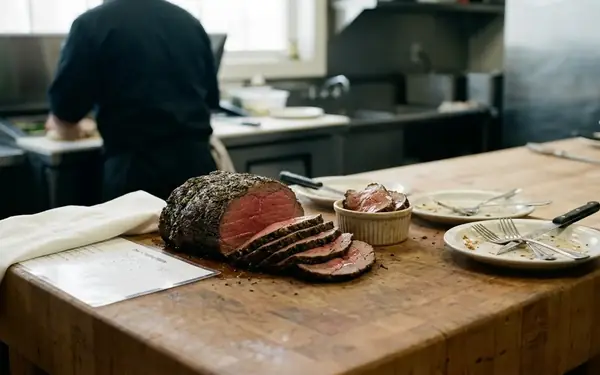
The link between Sendagaya and Iidabashi is practical before it is sentimental. Cuts move through a shared preparation logic. Service styles diverge. The family resemblance shows up most clearly when a roast reaches the table: rested, carved with restraint, and supported by bread, sauce, and pasta rather than buried under them.
Quick Nav
- Where did the Bocca family story begin in Sendagaya?
- What changed when the family opened in Iidabashi?
- Which cooking methods remain identical across both sites?
- How do the dining atmospheres differ between locations?
- What are the current boundaries of the Bocca lineage?
Where did the Bocca family story begin in Sendagaya?
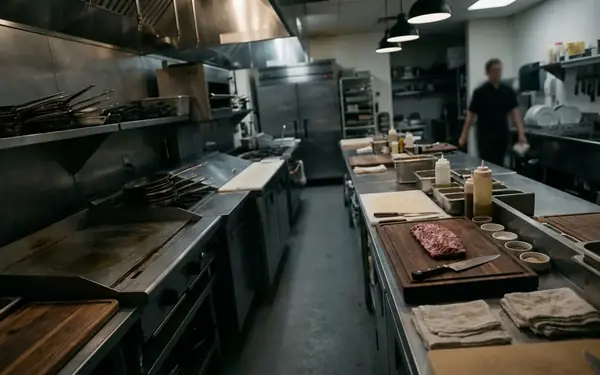
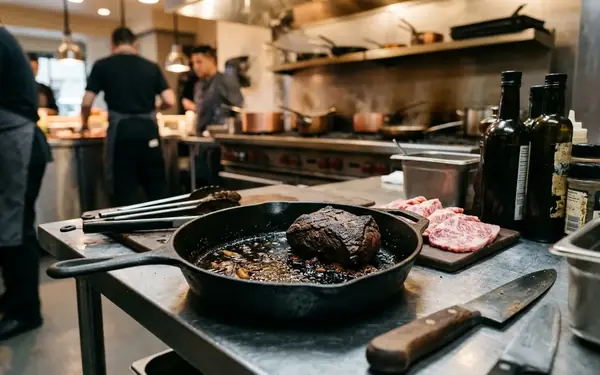
Sendagaya gave the Bocca family its grammar: a short room, a visible counter, and a menu that made beef the center of the conversation. During our visit, the most persuasive detail was not a dramatic flame or a long speech from the kitchen. It was the quiet confidence of a cook trimming a cut with the kind of care usually reserved for fish at a sushi counter.
The first identity was built through butchery
The culinary team established the original meat-centric identity by mapping local butcher networks, then choosing whole-carcass breakdown in-house. That decision shaped everything after it. Instead of buying only glamorous cuts, the kitchen had to learn the animal’s less obvious sections, decide which muscles could age, and assign slower preparations to tougher pieces.
Initial dry-aging trials ran 28 to 32 days. That range helped the team settle on the best balance between moisture loss and flavor concentration. The sourcing program focused exclusively on cattle raised for 24 to 26 months, a narrow window that gave the kitchen a more predictable texture before aging ever began.
Partnerships mattered because they reduced guesswork
The early family partnerships were not decorative. Supplier relationships gave the cooks access to age records, handling notes, and certified documentation that made whole-carcass planning less fragile. A restaurant can romanticize nose-to-tail cooking in one paragraph; it needs traceable supply to execute it through a full week of service.
That is the Sendagaya lesson in miniature. Technique starts before the pan.
Key Takeaway: Bocca’s lineage begins with control over the animal, not with a single famous dish. The original counter made that control visible to guests.
What changed when the family opened in Iidabashi?
The common move for a second location is to loosen the concept and chase the new neighborhood. Iidabashi could have gone that way. The head chef considered a lighter, seafood-driven menu for the business lunch crowd, then moved away from that idea because it weakened the family’s clearest identity.
The better alternative was narrower: keep the roast logic, adjust the pacing.
A larger room demanded a different menu rhythm
During extended stays, the original Sendagaya location works with 14 to 16 counter seats. Iidabashi expands that frame to a 42 to 46 seat floorplan, which changes the kitchen’s pressure points immediately. A counter can pace itself through direct conversation. A larger dining room needs dishes that land cleanly without making every table wait for the same carving moment.
That is where Iidabashi’s menu adaptations matter. The core roasts remain central, while pasta portions in the 80 to 90 gram range give the meal a neighborhood-friendly structure. Lunch service also had to move with purpose; the room was tuned for a 45 to 55 minute turnaround, tight enough for office diners but not so rushed that the meat program loses its presence.
The heritage stayed in the signatures
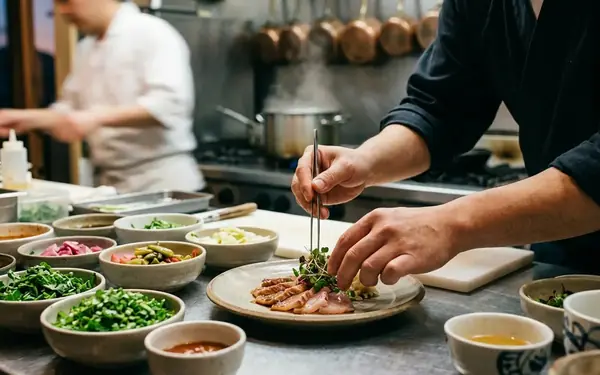
The preserved dishes are the ones that carry the Bocca signature most clearly: whole-carcass roasts, slow-rested meat, and bread service that supports rather than distracts. The new preparations appear around those anchors. Iidabashi has more room to stage a meal through pasta, salad, and shared plates, but the plate still points back to Sendagaya.
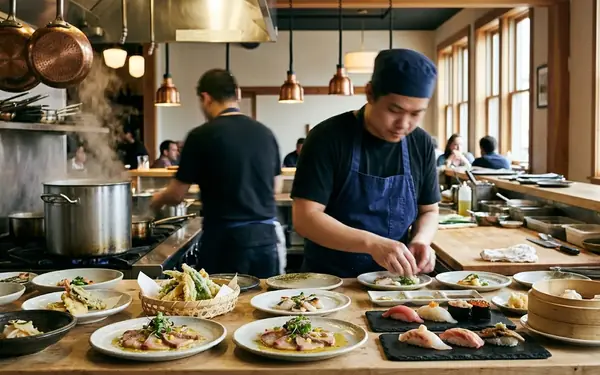
Space design follows the same rule. Iidabashi does not pretend to be a counter restaurant. It uses a broader dining room flow, more table spacing, and a service pattern that lets groups settle in without losing the family’s meat-first discipline.
Which cooking methods remain identical across both sites?
The cooking methods that matter most remain shared, but not because every cook follows a frozen script. Bocca’s consistency comes from central control at the beginning and skilled adjustment at the end.
Centralized prep protects the cuts
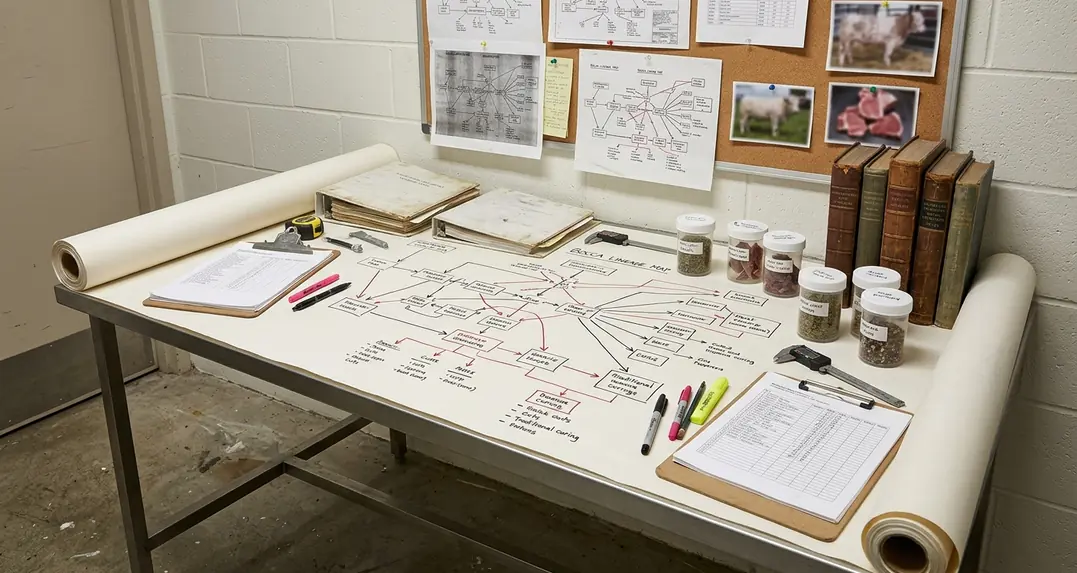
To keep consistency across both kitchens, the executive team keeps primary butchery and initial curing centralized at the original site. Prepared cuts then move to the expanded location with the foundational work already done. This matters because early trimming and curing decisions affect everything that follows: grill response, resting time, slicing, and final seasoning.
Aging coolers are calibrated to hold relative humidity between 78 and 82 percent. That range gives the kitchen a shared baseline, especially for cuts that need enough surface drying to build flavor without drifting into excessive loss. The conclusion rests on operating patterns and menu execution rather than public supplier ledgers, so the most useful reading is comparative: the two rooms share technique, then express it through different service formats.
Wood fire stays disciplined, not mechanical
The wood-fired approach links both sites, but cooks do not treat fire like a stopwatch. Resting periods are maintained between 18 and 22 minutes, yet the exact point inside that window depends on the kitchen’s ambient humidity and the cut’s condition after cooking. Wood-fired resting times cannot be standardized across locations as a single minute mark; they require dynamic adjustment based on each kitchen’s microclimate.
That distinction separates a family method from a franchise manual. The rule is shared. The judgment remains local.
Seasonal sourcing gives the menu its edges
Seasonal sourcing partnerships also run through the Bocca network. The meat program provides the backbone, while vegetables and supporting elements shift with availability. A winter roast may carry a different vegetable accent at Iidabashi than at Sendagaya, but the hierarchy stays intact: meat first, seasoning second, garnish third.
Pro Tip: When comparing the two restaurants, order a roast at both before judging the lineage. Pasta and room design vary by location; the roast reveals the shared kitchen logic.
How do the dining atmospheres differ between locations?
Sendagaya is intimate because it has no real choice. The counter forces attention. Guests watch the cooks, hear the timing calls, and feel the room slow down around a tasting-menu rhythm.
Iidabashi feels more open and more social. It suits a table of colleagues at something like 18:30 better than a two-person counter pilgrimage at approximately 20:00. That does not make it less serious; it makes it less inward.
Sendagaya rewards diners who want proximity
Peak reservation requests at the original site cluster between 19:45 and 20:30. That later concentration fits the room’s personality. Guests arrive ready to stay, watch, ask, and eat through a longer arc.
The counter also changes the critic’s job. You can see whether the kitchen rests meat with patience or rushes the slice. You can watch how much salt lands after carving. Sendagaya makes technique public.
Iidabashi manages movement
The newer location sees its highest volume earlier, typically from 18:15 to 19:00. That pattern matches the neighborhood and the expanded dining room. People come in after work, before a later engagement, or with a group that needs a dependable meal rather than a drawn-out performance.
The team learned not to copy Sendagaya too literally. Attempting to replicate the original counter-service intimacy in the larger floorplan created serious bottlenecks in early service. Iidabashi needed its own choreography: a broader entrance flow, clearer table pacing, and a menu that could absorb simultaneous orders without flattening the cooking.
| Operational Feature | Original Origins | Expanded Location |
|---|---|---|
| Primary Seating | 14 to 16 counter seats | 42 to 46 dining room seats |
| Peak Dinner Volume | 19:45 to 20:30 | 18:15 to 19:00 |
| Menu Adaptation | Core whole-carcass roasts | Core roasts with 80 to 90 gram pasta portions |
What are the current boundaries of the Bocca lineage?
The Bocca family network has limits, and those limits make the restaurants more credible. A meat program built on central butchery cannot expand endlessly without changing its nature. The family appears to understand that constraint.
The geography is deliberately tight
Future expansion boundaries were drawn after a review of supply chain logistics. The maximum allowable distance between the central prep kitchen and any new dining room is kept somewhere around 3.5 to 4 kilometers. That range protects the condition of prepared cuts during movement and keeps the original site meaningful as a technical hub.
This is not the language of empire-building. It is the language of a kitchen that knows where quality begins to fray.
The menu has serving limits too
Signature roast portions are limited to 24 to 28 servings per dinner service. That cap may frustrate late bookers, but it protects the dish from becoming a volume item. Once a roast program stretches beyond its resting, carving, and holding capacity, the texture pays first.
There is also a seasonal boundary. Shared menu items depend on neighborhood availability, so the newer location occasionally substitutes root vegetables when the primary farm’s yield drops below daily requirements. That kind of substitution does not break the lineage. It shows where the lineage has room to breathe.
Family oversight keeps the name from drifting
The family oversight structure matters because Bocca’s identity lives in small decisions: when to trim, when to rest, when to stop taking orders for the roast. Sendagaya holds the original discipline. Iidabashi translates it for a larger, faster room.
The link between them is not nostalgia. It is a working system with clear boundaries, shared technique, and enough local difference to keep both restaurants honest.
Warning: Do not read Iidabashi as a simple upgrade or Sendagaya as a museum piece. The better comparison asks what each room is built to do, then follows the meat program back to its source.