Quick Nav
- The outer moat and Iidabashi’s dining rhythm
- How the district differs from Ginza and Roppongi
- Roast beef and A5 wagyu through an Italian lens
- The sequence of a canal-side dinner
- How to read carne, cuts, and courses
- Five railway lines meeting the old moat
The Outer Moat That Taught Iidabashi How to Dine
Iidabashi begins with an old piece of infrastructure: Iida Bridge crossing the water beside Edo Castle’s outer moat. The water and surviving earthworks still determine how the district feels at street level. Routes bend, canal paths pull pedestrians away from the broad roads, and a short walk can seem detached from the station behind it.
That physical pattern matters at dinner. From the station, the canal paths sit roughly four to six minutes away on foot. The distance is modest, yet the transition is clear enough to slow a person who has just stepped off a train. Office façades give way to water, railings, trees, and the long view down Sotobori.
On a moat-side walk, I notice how quickly pedestrians settle into pairs rather than streams. Conversation starts before the restaurant door. That pacing supports a dining room where a meal can occupy 90 to 120 minutes without feeling ceremonious.
From Pasta Turnover to the Roasting Tin
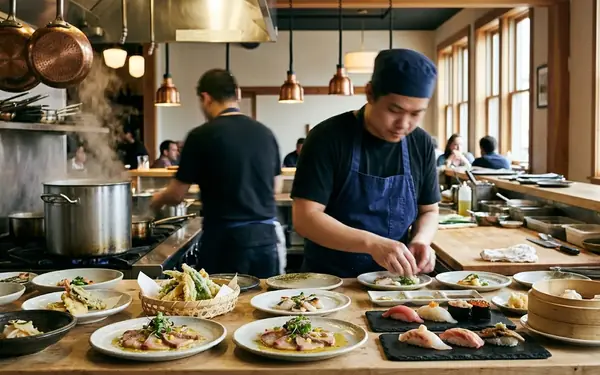
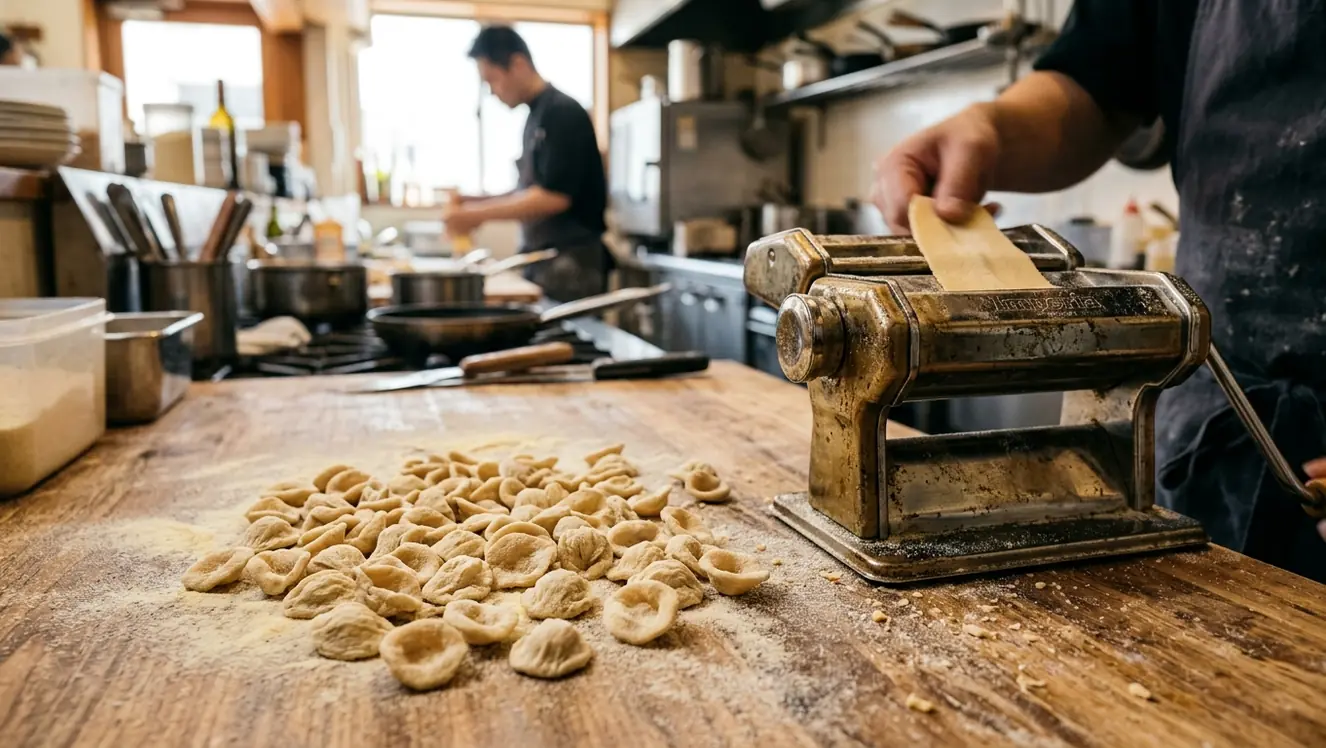
A fast-turnover pasta lunch once looked like the obvious response to nearby office traffic. Observation along the moat suggested a different fit. Guests arrived at a gentler pace, so the kitchen centered the meal on signature meats that reward waiting: roast beef given time in the oven, time on the resting rack, and time at the table.
The older street plan therefore does more than provide atmosphere. It gives a meat-centric Italian trattoria room to linger without competing for attention through spectacle.
Ginza Marble and Roppongi Neon Never Suited a Slow Roast
Ginza trains the eye toward polished windows and the next immaculate entrance. Roppongi gathers momentum later, when bright signs and late-night rooms compress the distance between dinner and whatever follows. Both districts can sustain serious cooking, though their street rhythms place a premium on visible arrival.
Iidabashi works through subtraction. On the way to the table, a diner hears footsteps, trains crossing beyond the water, and conversation carrying along the canal. Inside a quiet room, background jazz remains audible without guests raising their voices. Attention moves toward smaller cues: the fragrance of rosemary, a server lifting the antipasto plates, the first spoonful of jus crossing a warm slice.
Resting Time Becomes Service Time
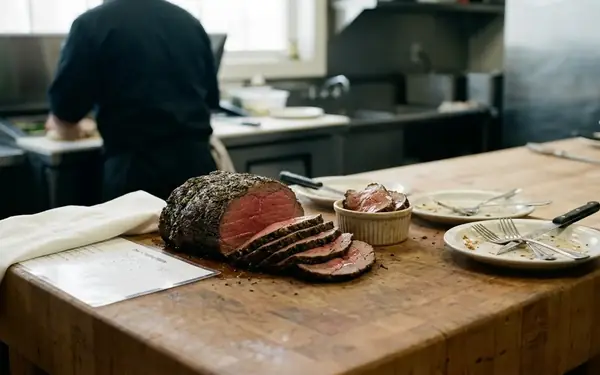
An approximately 2.5-kilogram roast beef joint rests for 35 to 42 minutes in this kitchen’s protocol. That interval lets the temperature settle and the juices redistribute. It also matches the room’s conversational pace, allowing the kitchen to bring the roast forward without forcing the table into an artificial pause.
This is where neighborhood context enters the cooking directly. The room does not merely accommodate a long rest after the oven; its service rhythm makes that rest useful. Guests can finish an antipasto, take another pour, and hear the music while the meat reaches the condition required for clean slicing.
When Italian Cooking in Tokyo Means Roast Beef and A5 Wagyu
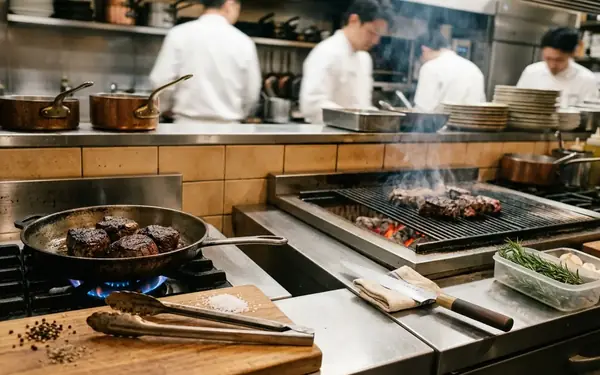
Here, Italian treatment means slow heat, rosemary, pan juices, and slices served as a shared carne course. The governing image is the roasting tin rather than the steakhouse grill.
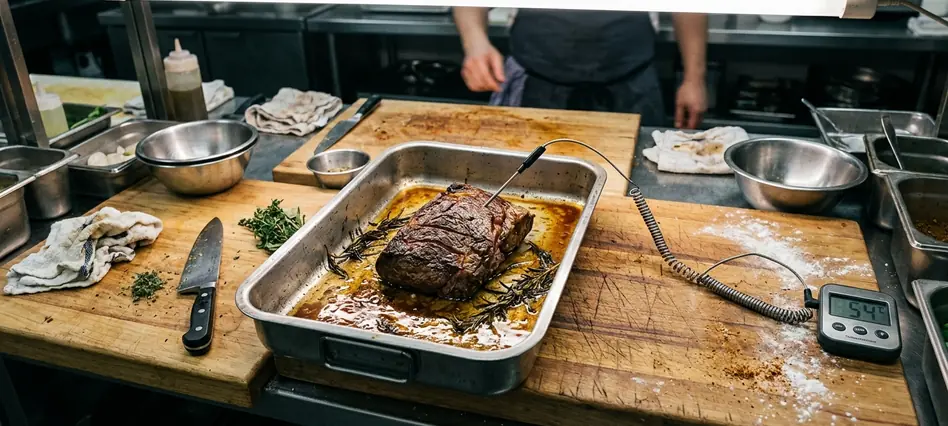
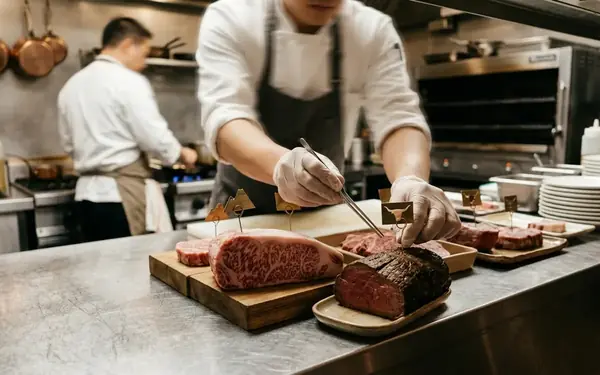
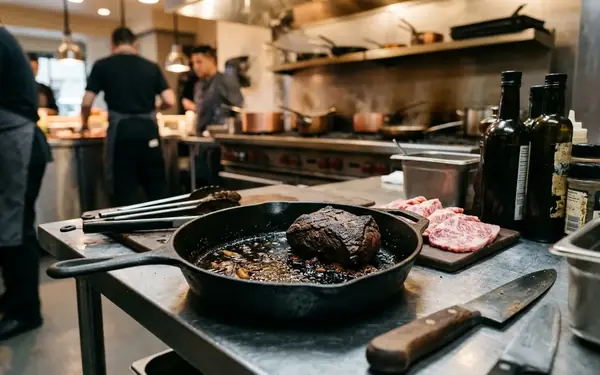
A5 wagyu complicates that approach because its fat carries flavor and can easily dominate the plate. Intense searing pushes the browned surface forward while rendering the interior richness abruptly. Roasting at 110°C to 120°C gives the fat a gentler path into the pan juices. The kitchen aims for a core temperature of 52°C to 54°C, then slices the beef so each portion carries meat, softened fat, and jus in proportion.
Keeping Marbling in Balance
The pan needs watching. When marbling becomes excessively high, rendered fat can pool in the roasting tin instead of circulating around the meat. The result is a greasy sauce that mutes rosemary’s resinous edge. A leaner spoonful of jus, careful skimming, and restrained slice size preserve contrast across the plate.
These temperatures and observations describe one kitchen’s meat-centric Italian reading; they do not amount to a census of Italian restaurants across Tokyo. Within that scope, the method has a coherent aim: richness should open gradually and leave enough appetite for the next slice.
Roast beef and wagyu also occupy different positions. A roasted joint offers an even blush, a soft outer edge, and pan juice absorbed across thin slices. A tagliata-style wagyu presentation places more emphasis on the cut surface and the distinct richness of each piece. Both belong at a trattoria table when the course remains shareable.
A Canal-Side Evening, from Sotobori to the Second Cut
The evening starts at the station exit. A turn toward Sotobori replaces the pressure of the platform with dark water and a measured path. Four to six minutes later, the trattoria door marks a second change in scale: from an open canal edge to a room organized around close tables, bread, and the roasting schedule.
- Settle with antipasto. Choose something with acidity or bitterness so the palate remains alert.
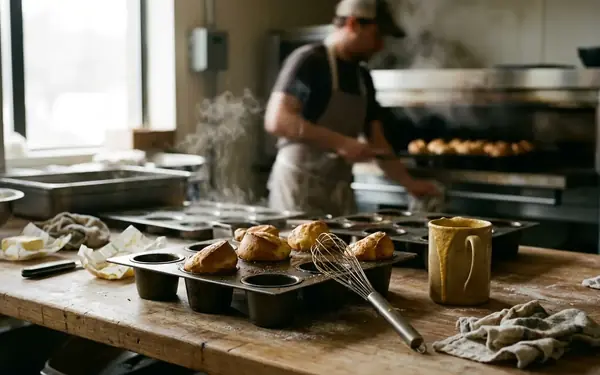
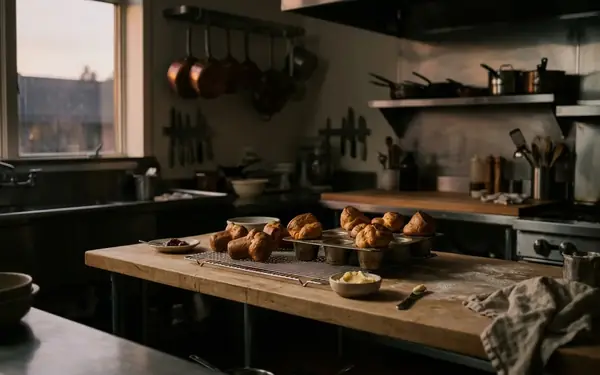
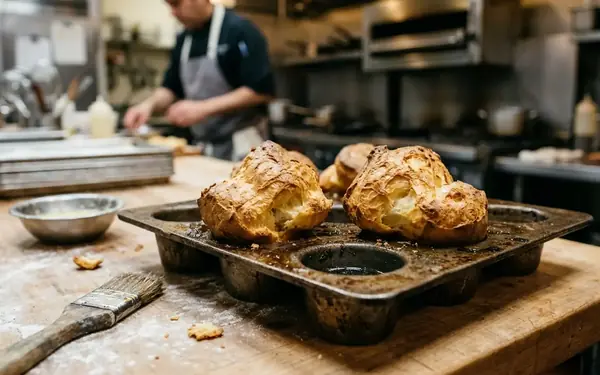
- Let the popover tradition establish the pace. Fresh bread occupies the interval without turning it into dead time.
- Watch the clearing cue. Front-of-house staff signal the kitchen when the antipasto plates physically leave the table.
- Receive the roast freshly cut. The joint is sliced to order, limiting oxidation and preserving the gloss of the surface.
- Take the second cut slowly. The first slice explains the seasoning; the next reveals how the jus and interior fat settle together.
Eight Minutes Behind the Door
The interval between clearing the first course and plating the roast runs about eight to twelve minutes. In that window, the kitchen slices the rested joint, arranges the meat, and adds jus held at 70°C to 75°C. The sauce comes from the roasting process rather than a separate steak ritual.
This sequence protects both temperature and texture. Slicing too early exposes more surface to air. Holding finished slices while a table lingers would trade tenderness for convenience. The clearing signal keeps kitchen-floor timing tied to what guests are actually doing.
Cuts, Courses, and What Carne Signals Near Iidabashi
A meat-centric Italian menu asks diners to read sequence as carefully as ingredients. Carne marks the main meat course, but the useful questions concern form: Is tonight’s beef carved from a roasted joint? Is the A5 wagyu served tagliata-style? Are the portions intended for one guest or for the table?
Roast beef cut to two or three millimeters emphasizes tenderness and lets the jus season a broad surface. Tagliata-style wagyu usually asks for more attention per piece because the marbling lands with greater concentration. When both appear on the same night, ask which preparation shows more pan character and which carries the richer finish. Ordering one for shared comparison often makes more sense than treating them as parallel individual mains.
Build the Meal Around the Jus
Course design steers guests toward bright antipasti before the signature meats. Bitter leaves, restrained vinaigrette, or a clean vegetable preparation prepare the palate more effectively than a heavy cream-based primo. Pasta lunches have their place, but a dense first course can make wagyu feel monotonous before the carne arrives.
Let the Roast Lead
Match wine weight to the beef’s fat rather than choosing the heaviest bottle available. Red wine served at 16°C to 18°C keeps freshness in view. Leave room for the pan jus, skip a second rich primo, and use the popover to collect the final spoonful without burying the rosemary.
This approach also clarifies portioning. Shared slices allow the table to compare the roast’s outer edge, center, and jus-coated pieces. The meal gains variation from the joint itself rather than from piling on competing dishes.
Five Lines, One Moat: Why the Quiet Was Always the Point
Iidabashi Station on the Tokyo Metro forms part of a rail junction served by five lines. That accessibility might suggest a hurried dining district. The station’s relationship to the old outer moat produces the opposite effect: guests arrive efficiently, then the canal path releases them from the interchange almost at once.
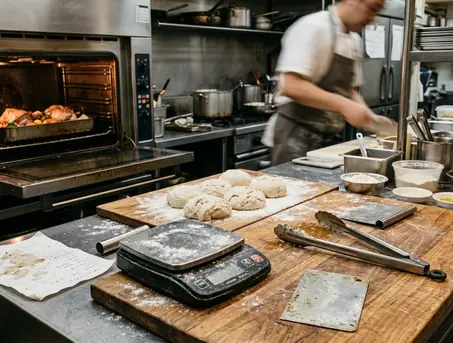
The geography also reaches into the roasting schedule. Reservations concentrate arrivals into waves, so continuous cooking would leave some joints waiting too long and others under-rested. The kitchen instead uses three staggered roasting batches, spacing them 20 to 25 minutes apart. Railway timing becomes oven timing.
The Quiet Has Structure
Sotobori’s water and castle earthworks give the Iidabashi location its composure. They redirect footsteps, preserve visual distance, and create a short decompression zone before dinner. Sister restaurants elsewhere may share ingredients or service habits, but they cannot reproduce this exact passage from rail platform to moat edge.
That is the district’s durable proposition: five railway lines deliver diners to an old canal, and the kitchen prepares for their most concentrated arrival between 18:15 and 18:45.