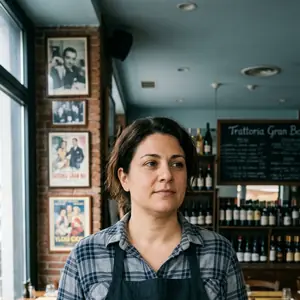
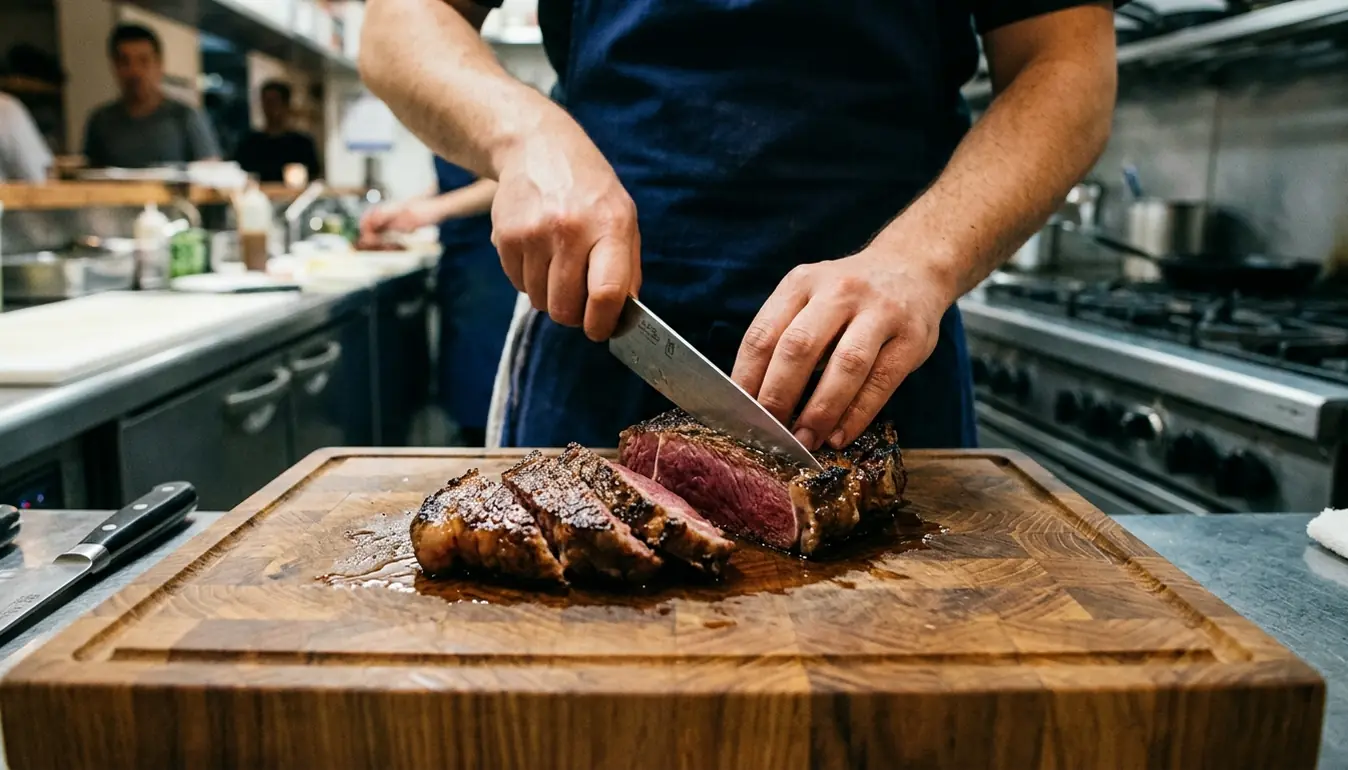
Five premium cuts at Gran Bocca are sequenced as a controlled tasting of fat, heat, rest, and appetite: A5 Wagyu first, slow-roasted beef as the central reference point, pork shoulder and belly as the contrast, and a final carved cut timed to the table rather than the clock.
The choice that defines the menu is simple and slightly counterintuitive. The richest beef arrives early, while the diner is still hungry enough to register sweetness, marbling, and temperature without fatigue. Saving A5 Wagyu for the end of a long tasting menu often leads to the least useful result in meat service: gorgeous beef meeting a tired palate and half-finished plates.
Quick Nav
- A5 Wagyu anchors the entire menu
- Slow-roasted A5 Wagyu
- Pork preparations that follow
- Choosing between the five cuts
- A quiet table near the kitchen pass
A5 Wagyu anchors the entire menu
Why the richest beef comes first
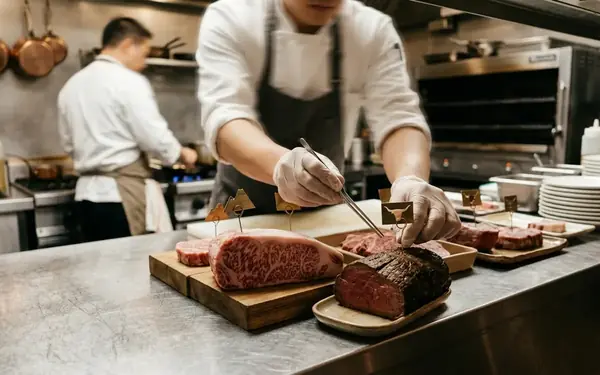
A5 Wagyu sets the terms for every cut that follows. Its marbling coats the palate quickly, so the kitchen treats it less like a climax and more like a calibration point. Once that first slice lands, the rest of the signature meats have to answer a sharper question: can they offer texture, seasoning, or roast character strong enough to stay legible after the beef?
The kitchen team established the sequence by evaluating palate impact, then chose to serve the richest beef first to capitalize on the diner’s initial hunger. That decision matters more than menu drama. A diner who receives A5 early notices the transition from warm fat to mineral beef; a diner who receives it late may only notice richness.
Resting discipline supports that opening move. The beef rests for 18 to 22 minutes before the first slice, with the oven ambient temperature held between 110 and 115 degrees Celsius during the slow phase. Those numbers do not turn the cut into a formula, but they narrow the margin between luxurious and heavy.
What it asks of the following cuts
After A5, the menu cannot lean on tenderness alone.
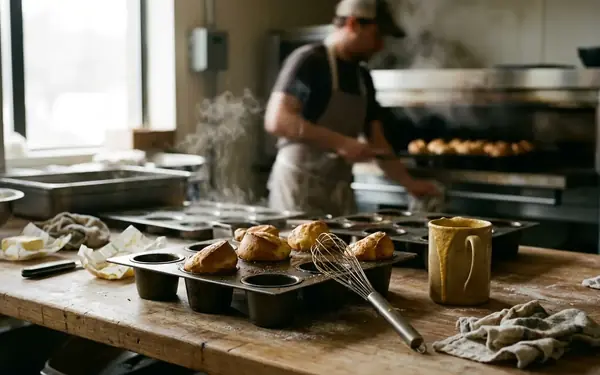
Pork shoulder needs depth. Pork belly needs structure. The final carved cut needs precise timing. Even the popover tradition plays a supporting role here, because warm bread gives the diner a way to reset between rendered fats without flattening the next bite.
Service note: At the Iidabashi location, A5 Wagyu does not merely headline the meat course. It establishes the sensory baseline for the five-cut progression.
Slow-roasted A5 Wagyu
Marbling, tenderness, and the narrow temperature band
Slow-roasted A5 Wagyu is the cut most diners remember because it behaves differently from a conventional steak. The tenderness does not come from aggressive cooking or thick char. It comes from restraint: gradual heat, controlled rest, and a final surface treatment that gives the slice enough edge without pushing the intramuscular fat too far.
The core temperature target sits at 52 to 54 degrees Celsius. That range keeps the center supple while allowing the marbling to soften rather than leak out. If the beef climbs too high, the slice can taste impressive for one bite and exhausting by the third.
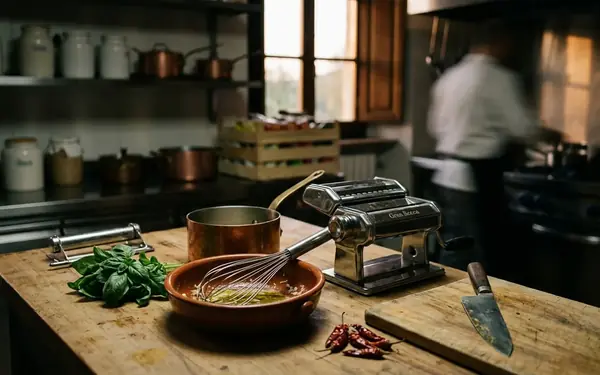
This is where Gran Bocca’s Italian frame meets the discipline of Japanese beef service. The plate still belongs to the restaurant’s broader world of pasta & lunches, popovers, and generous tables, but the Wagyu demands a more exact language. Salt, heat, and slice thickness carry more responsibility than garnish.
The reverse-sear logic
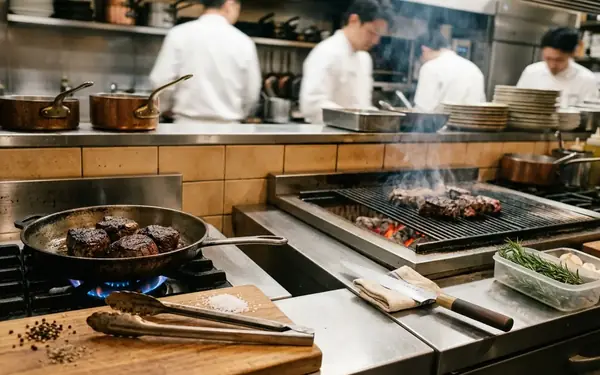
The kitchen uses a reverse-sear method to build an even crust without over-rendering delicate fat. The meat comes up to temperature gradually, then receives a final high-heat flash on a cast-iron plancha for 45 to 60 seconds per side.
That short sear matters. A long sear would make the exterior louder, but it would also pull too much fat from the interior. The better result comes from contrast: a warm, yielding center and a surface that carries just enough roast bitterness to frame the sweetness of the beef.
Tasting note: When tasting the slow-roasted A5, take the first bite without sauce or bread. Use the second bite to judge how the crust and fat behave after a short pause.
Pork preparations that follow
Shoulder after Wagyu
Pork shoulder earns its place by refusing to imitate beef. It brings collagen, braise depth, and a broader savory profile. Where A5 Wagyu feels polished and immediate, shoulder gives the table something slower to read.
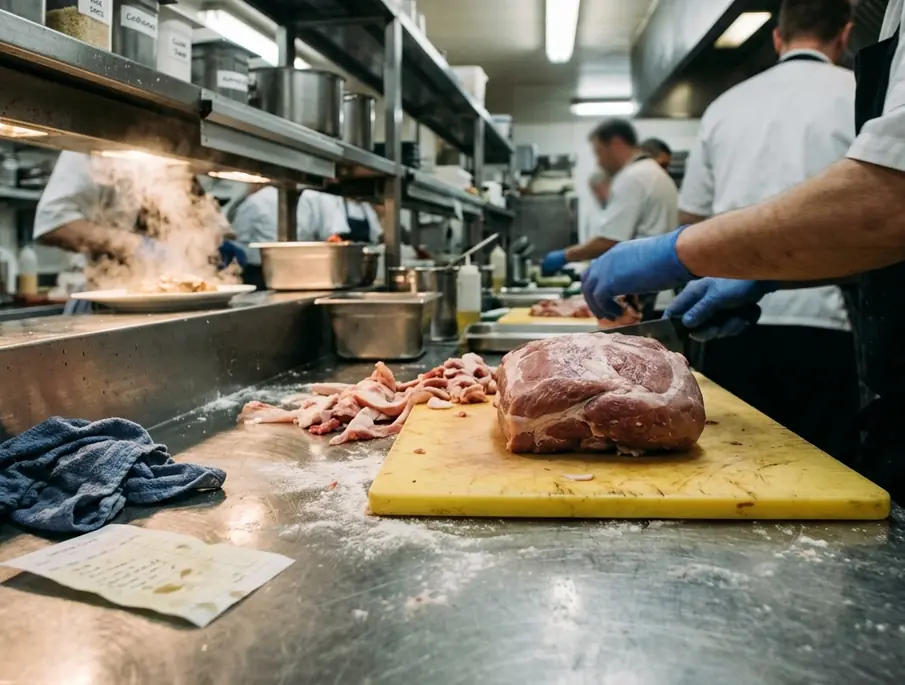
The culinary team initially tested a lean heritage pork loin for the second course, but its subtle flavor fell behind the preceding A5 Wagyu. The better alternative was shoulder, with enough fat and connective tissue to hold seasoning after the beef had already marked the palate. Wet brining for 14 to 16 hours gives the shoulder a deeper seasoning base before cooking.
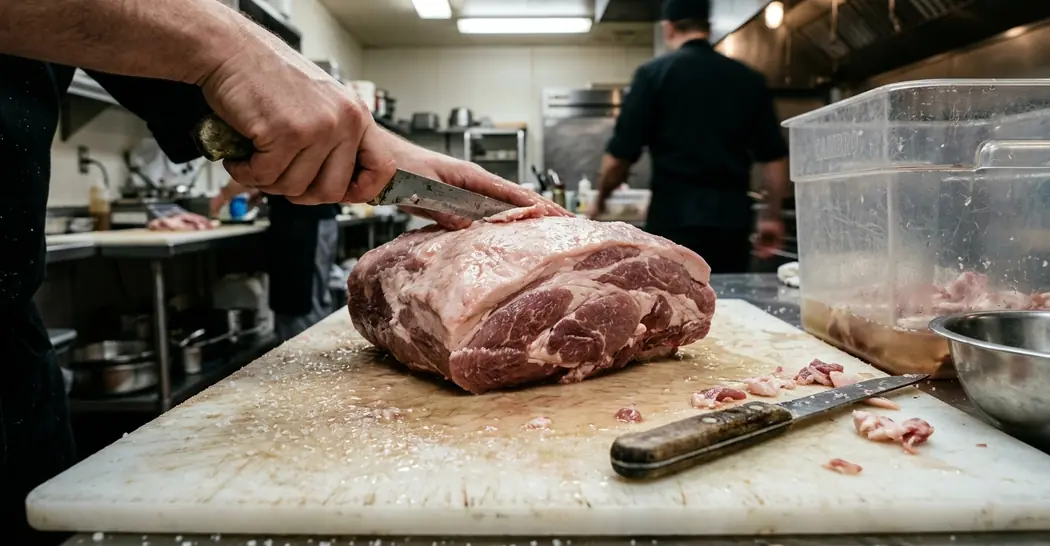
Pork shoulder braising times must be adjusted based on the specific fat cap thickness of each seasonal delivery. A shoulder with a thicker cap needs a different pace than one trimmed close. The cut may look rustic, but the cooking decision is not casual.
Belly as the richer contrast
Pork belly occupies the dangerous part of the menu. It can delight the table or overwhelm it.
That risk explains why belly needs a firmer service logic than shoulder. The braising liquid reduces by two-thirds over approximately a 3.5- to 4-hour simmer, concentrating flavor while giving the fat a cleaner frame. The cut should arrive succulent, not loose; rich, not slack.
The shoulder and belly together show why the five premium cuts work as a sequence rather than a ranking. Shoulder answers Wagyu with chew and braise aroma. Belly answers it with another kind of luxury, heavier and more direct. Neither cut needs to beat the beef; each needs to make the next forkful feel justified.
Richness note: The complete five-cut progression demands a high tolerance for rich, rendered fats. For late-evening seatings, the abbreviated three-course option can feel sharper and more comfortable.
Choosing between the five cuts
Flavor intensity and texture
The five-cut progression works best when diners choose by appetite, not prestige. A5 Wagyu brings the highest marbling impact. Slow-roasted A5 adds the clearest expression of controlled heat. Pork shoulder gives the most braised depth. Pork belly delivers the richest pork fat. The final carved cut depends on timing: it succeeds when it reaches the table hot, rested, and still expressive.
In practical terms, the choice comes down to how much rendered fat the table wants to carry through the meal. A diner who loves a clean beef finish should lean toward the Wagyu-led sequence and keep sides modest. A diner who wants a deeper, more trattoria-style rhythm should give more attention to pork shoulder, especially with popovers or a restrained pasta course nearby.
The kitchen tastings that shaped portion size focused on the menu as served at the Iidabashi location, so the notes are strongest on sequence, satiety, and yield rather than universal butcher taxonomy. That qualifier matters. A cut that feels balanced in this room, with this bread service and pacing, may read differently in a steakhouse format.
Portions and pairings
Portion size keeps the progression from turning into a test of endurance. Wagyu portions stay restricted to 40 to 50 grams per guest, while pork shoulder servings sit at 75 to 85 grams. The smaller beef portion respects its density; the larger shoulder portion gives the diner enough surface, sauce, and fiber to understand the preparation.
Pairings should follow texture. A5 Wagyu likes restraint: salt, a warm plate, perhaps a small bite of bread after the slice rather than before it. Pork shoulder can handle more of the table around it. Pork belly needs the cleanest companion, because doubling down on richness can blur the dish.
- Choose A5 Wagyu first if the table wants the clearest expression of marbling and tenderness.
- Choose slow-roasted A5 if controlled doneness and crust matter more than a dramatic char.
- Choose pork shoulder for braised depth, seasoning, and a more generous bite.
- Choose pork belly when the table wants concentrated richness and a softer fat profile.
- Trust the final carved cut when timing from pass to table matters as much as the cut itself.
A quiet table near the kitchen pass
The last cut is a timing decision
The final plate at Gran Bocca depends on the expediter as much as the cook. The cut is carved only after guests finish the preceding course, which prevents the meat’s surface temperature from dropping while the table is still busy with the last bites. That small delay protects the work already done on the board.
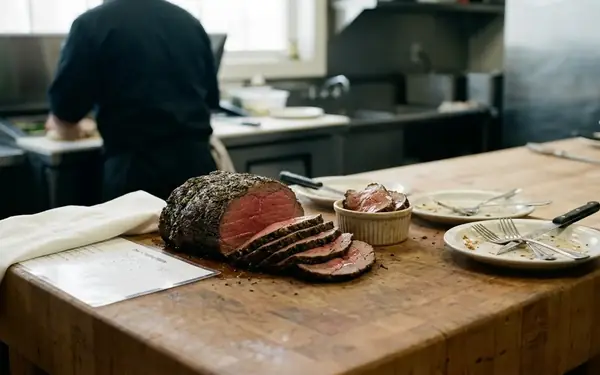
The service window runs 90 to 120 seconds from carving board to table. The resting board stays at a constant 45 degrees Celsius, warm enough to protect the surface without pushing the meat into another stage of cooking. This is not theatrical tableside carving. It is quiet temperature management.
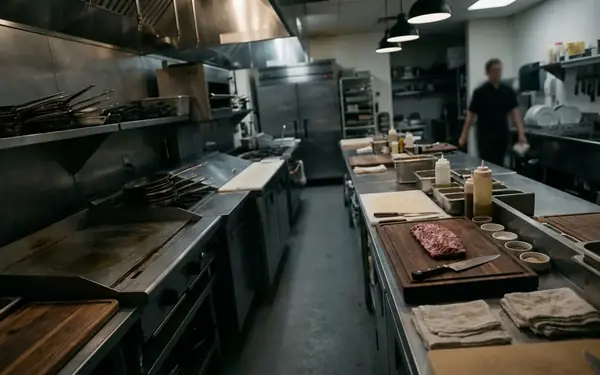
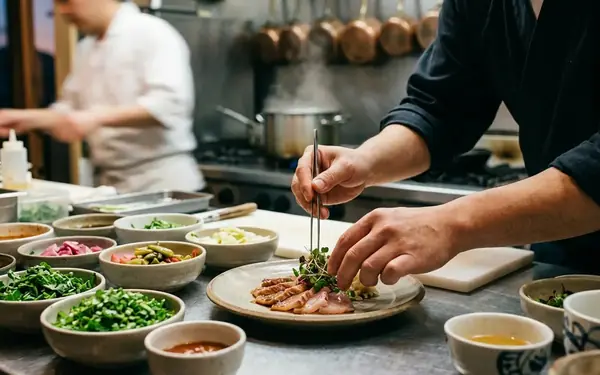
Near the kitchen pass, a server waits with one hand on a warm plate while the carver checks the table. Two guests set down their forks after the pork belly. The blade moves, the slices fan out, and the final cut leaves the board while its edge still glistens; by the time it reaches the corner table, the popovers are already torn open and waiting.