
Why Does Heavily Marbled Japanese Beef Stay Moist Through a Long Roast?
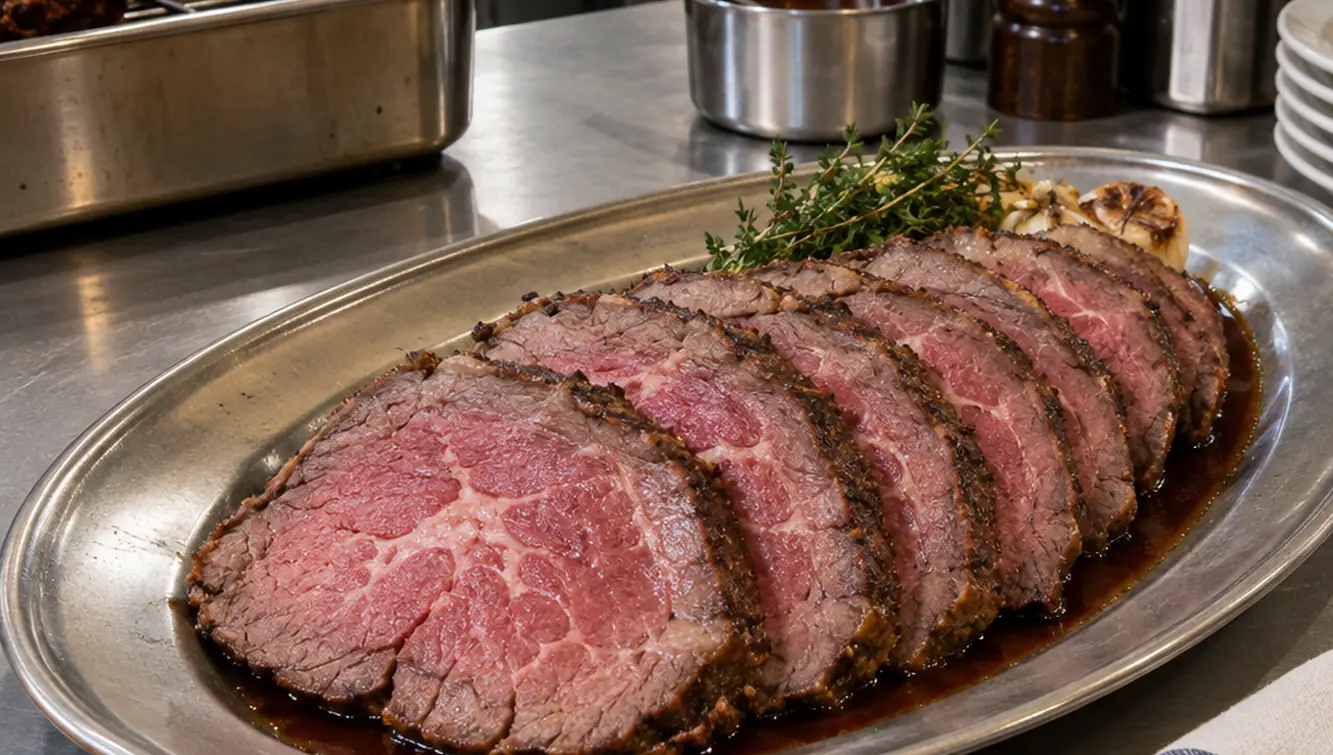
Why does a long roast of heavily marbled Japanese prime stay moist at the center instead of tightening into gray slices? The answer starts with the relationship between fat and lean. Fine intramuscular fat softens under gentle heat, while the surrounding muscle retains more moisture when the cook limits its exposure to aggressive temperatures. A long roast can therefore produce a yielding center without driving a broad band of lean past its intended doneness.
That balance is easy to disturb.
Japanese marbling gives the cook considerable richness to work with, but richness alone cannot protect the roast. Push the exterior hard to chase a crust early, and the lean beneath it contracts while the fat releases faster than the service can accommodate. The plate can end up carrying both dry meat and a greasy pool. Those faults can coexist because moisture retention and fat rendering describe different processes.
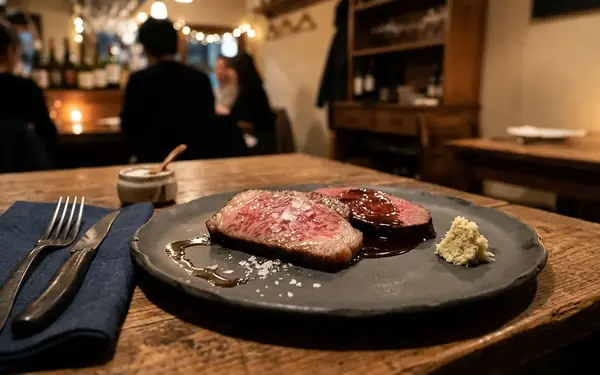
Gran Bocca’s prime-roast service brings those processes together through a deliberate sequence: read the raw meat, hold a gentle oven, reduce the roast’s own drippings, and finish the presentation at the carving cart. Within the signature meats served at the Iidabashi location, this approach gives heavily marbled beef room to express its particular texture. The crust provides an edge; the cut face carries the main argument.
Follow that sequence and the final spoonful of jus becomes a finishing touch rather than an attempt to restore moisture the oven has already taken away.
What the Roast Station Reads in the Raw Prime Before Heat
The first useful distinction lies between the fine white flecking inside the muscle and the heavier fat along its seams or outer cap. Each behaves differently. Intramuscular fat softens within the eventual slice; seam fat separates adjoining muscles; the external cap affects how the roast’s surface meets heat.
A marbling grade cannot replace that inspection. The station’s raw-prime assessment considers the distribution of the flecking, the width of the seams, and the firmness of the block under light pressure. Two pieces carrying the same grade can still present different roasting problems when one holds a broad seam through its center and the other carries a more even internal weave.
Compare that finely marbled prime with a leaner rump or round. The prime already contains fat throughout the portion the guest will eat. Its roast plan needs to soften that fat while preserving the lean around it. A leaner cut offers less internal richness and gives the cook a different margin for managing texture.
The external cap deserves a separate decision. An even trim prevents thick pockets from dominating the surface while retaining fat that can baste the exterior. Treating that cap as interchangeable with marbling obscures the most important reading on the board: where the fat sits matters as much as how much the label suggests.
Read Both Fats
Inspect the cut face for fine intramuscular flecking, then inspect the outside for uneven cap thickness. Make those separate judgments before choosing the roast’s heat exposure.
This reading belongs specifically to Gran Bocca’s heavily marbled prime roast and its tableside service. High-heat grilled steaks, braised cuts, and the broader pasta & lunches offering require their own cooking decisions.
How a Low Oven Renders Fat Without Squeezing Juice Into the Pan
Gentle heat gives the center time to warm while limiting the temperature gap between the outside and inside. As the intramuscular fat softens, the lean undergoes less severe contraction than it would under a hard roasting cycle. The aim is a narrower overcooked edge and a larger share of the roast at the intended texture.
Consider the opposite approach: a hot oven browns the surface quickly, making the roast look ready while its center still trails behind. Keeping it there to finish the middle exposes the outer lean to more heat. The resulting gray band represents edible yield pushed beyond the texture the service was trying to preserve.
The roast station therefore pays attention to the center’s spring and the liquid collecting beneath the meat, rather than treating exterior color as a completion signal. Those observations help describe what the roast is doing. They do not establish an exact internal temperature; thermometer readings remain important when judging doneness.
Door discipline matters, too. Repeatedly opening the oven interrupts the chamber’s heat balance and prompts recovery heating. Keeping the door closed through the primary cycle reduces that avoidable disturbance. At home, a cycling residential oven makes a copied restaurant timer especially unhelpful: follow the meat’s temperature progression and resting behavior instead.
| Stage | Useful Observation | Fault to Investigate |
|---|---|---|
| Raw inspection | Fine internal flecking and an evenly trimmed outer cap | Heavy seams or cap pockets that need separate attention |
| Roasting | A yielding center assessed alongside internal temperature | Rapid browning while the center lags behind |
| Resting | Juice behavior on the rack before carving | Substantial liquid escaping as the knife enters |
| Plating | Glossy marbling and a light film of jus | A separated fat pool or a heavy sauce coating |
Reducing Pan Drippings Until the Jus Naps the Meat
The pan already holds the basis of the sauce: beef juices, rendered fat, and browned fond. Gran Bocca’s short jus keeps those roast-specific flavors in the foreground. A heavy stock reduction can overwhelm the delicate sweetness of the fat and leave a sticky finish that persists after the slice is gone.
Start by examining the pan before adding liquid. Browned fond offers depth; blackened deposits contribute bitterness. Skim away the bulk of the clear rendered fat, leaving a thin film over the usable fond. That separation matters because reducing a pan full of fat will never produce the same result as concentrating its aqueous juices.
- Loosen the browned fond. Deglaze the pan and work the flavorful deposits into the liquid without scraping burnt material into the jus.
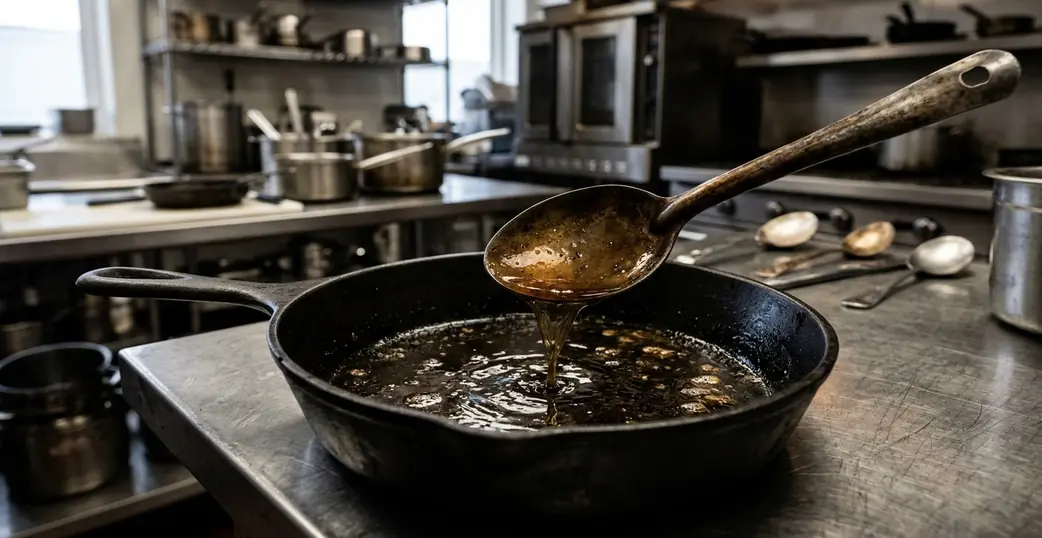
- Reduce gently. Watch the texture as moisture evaporates. The endpoint arrives when the liquid lightly coats the back of a spoon and still flows readily.
- Taste the concentration. Adjust salt after reduction, then use a little acidity to sharpen the beef flavor and lift the rich finish.
- Leave the flour out. For this service, a clear pan jus preserves the visible cut face and the texture of the roast.
“Naps” describes that light coating: the jus clings to the meat without turning into a thick covering. A spoon dragged through it should come away glazed, not loaded. Stop while the sauce can still run along a slice.
Carving at the Table So the Slice Shows the Marbling
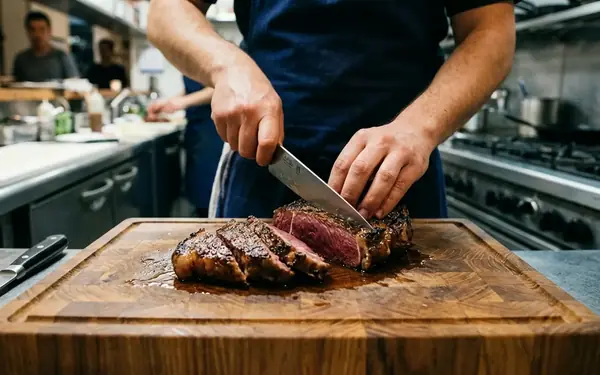
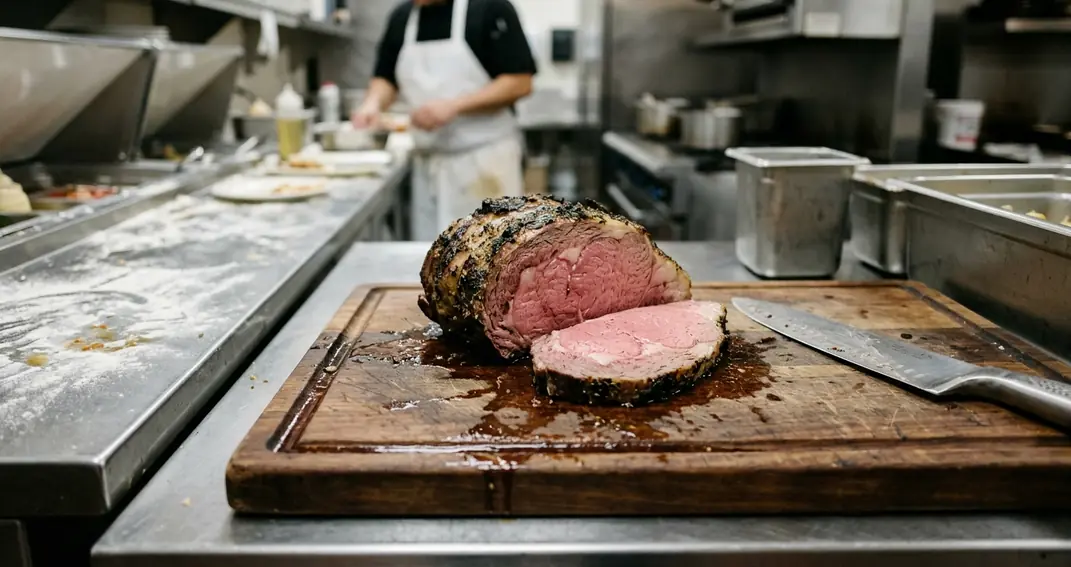
The carving cart protects a brief, useful interval between cutting and eating. Once the knife exposes the interior, the slice begins losing warmth and surface sheen. Cutting beside the guest lets the server move directly from the roast to warm ceramic, then dress the meat while its rendered marbling remains glossy.
That finish starts before the cart leaves the kitchen. The roast rests on a warm rack in a draft-free holding area so its internal temperature and pressure can settle. Cutting immediately sacrifices liquid to the board and makes the plate harder to control.
Grain direction determines the next move. The blade travels across the muscle fibers in a continuous stroke, producing a slice substantial enough to retain warmth yet thin enough to show the fine fat weave. An awkward angle leaves longer fibers for the diner to chew, even when the oven work was careful.
Warm plates support the same aim. A cold surface encourages the fat to firm before the guest takes a bite; excessive heat would continue cooking the underside. The service needs warmth that preserves the slice’s condition.
Keep Marbling Visible
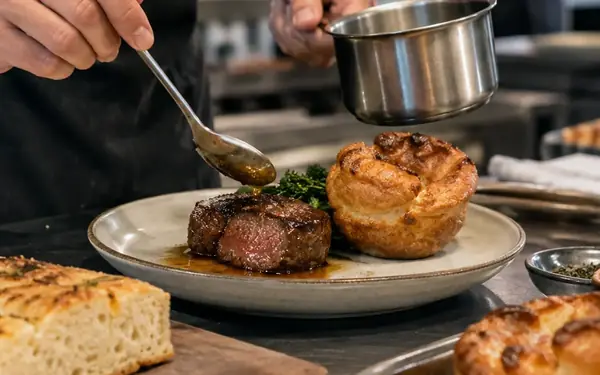
Spoon jus along the freshly cut meat and let a little reach the plate. Leave enough of the face exposed to see the grain, pink lean, and softened fat.
Within Gran Bocca’s popover tradition, a small amount of concentrated jus also gives the bread something worth catching. Flooding the plate dilutes the visual precision of the carve and makes every component share the same wet surface.
Gray Bands, Greasy Pools, and a Jus That Tastes Burnt
A wide gray edge points first toward excessive heat exposure. The oven may have run too hard early, or the roast may have remained hot too long after reaching its intended doneness. Check that sequence before changing seasoning or sauce. Neither can reverse contracted, dried lean.
A greasy pool needs a more careful reading. Rendered fat naturally appears in this dish, but a separated ring around the meat suggests the fat release, rest, and carving schedule fell out of step. Look for an abbreviated rest and examine what collected on the rack or board. Also check whether excess pan fat reached the plate through the jus.
These signs narrow the investigation; a finished plate alone cannot identify a single cause with certainty. A gray rim, for example, records heat exposure without telling the cook exactly when it occurred. The useful review connects the slice with the oven cycle, holding conditions, and carving sequence.
Catch Bitter Fond
Taste before reducing further. If the fond has burned, concentrating it will intensify the harshness. Extra salt or a thicker coating cannot recover the clean beef flavor.
A jus can also become unpleasant through over-reduction without obvious blackening. Its texture grows heavy, its seasoning concentrates, and the spoon coat turns into a persistent film. For the next pan, lower the reduction heat and stop earlier, while the liquid still moves freely.
Order the Slow Roast and Refuse to Rush the Carve
I would order this roast at the house medium-rare standard and give the tableside finish its full attention. That choice preserves the relationship the kitchen built between softened marbling, yielding lean, and a light pan jus. Asking for a hurried carve cuts directly into the rest and plating sequence that makes the dish work.
Cooking the center until gray pushes the same cut in the opposite direction, contracting the lean and driving out more of its internal richness. At home, carry over the low-heat logic, measured doneness, deliberate rest, and spoon-coat jus rather than borrowing a dining-room minute count.
For Gran Bocca’s marbled prime, choose the slow roast medium-rare and let the table carve finish the plate.