How an Egg-Leavened Batter Cup Picked Up Salted Butter and Maple
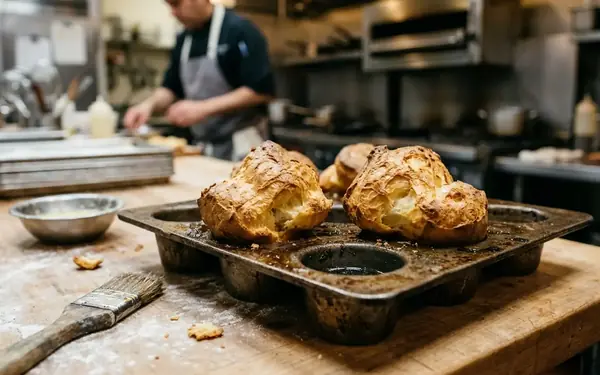
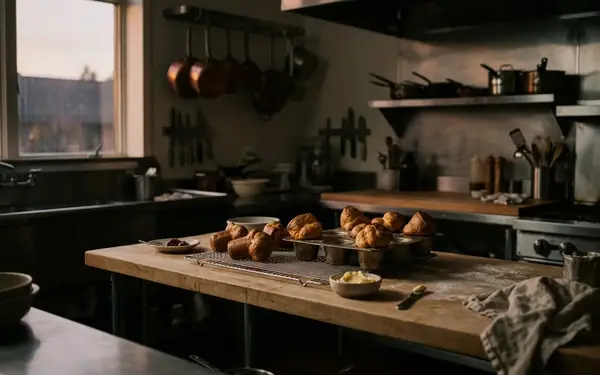
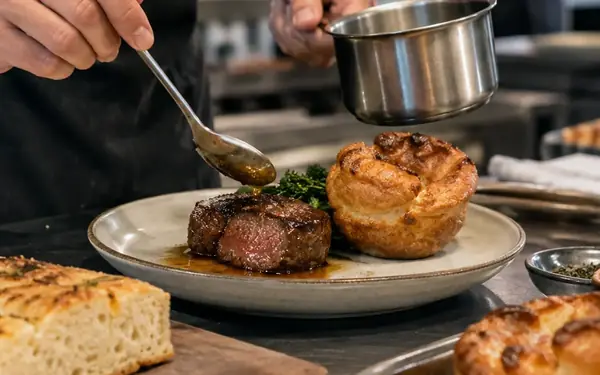
An English batter pudding rises in a pan of sputtering beef drippings, soaking up savory tallow as its walls climb. Early New England cooks stripped away the meat pan, preheated dry iron or tin cups, and let pure steam expand an egg-rich milk batter into a crisp, hollow shell. Because that dry-baked popover leaves the mold without any rendered roasting fat in its crust, it needs surface richness applied the moment it breaks open.
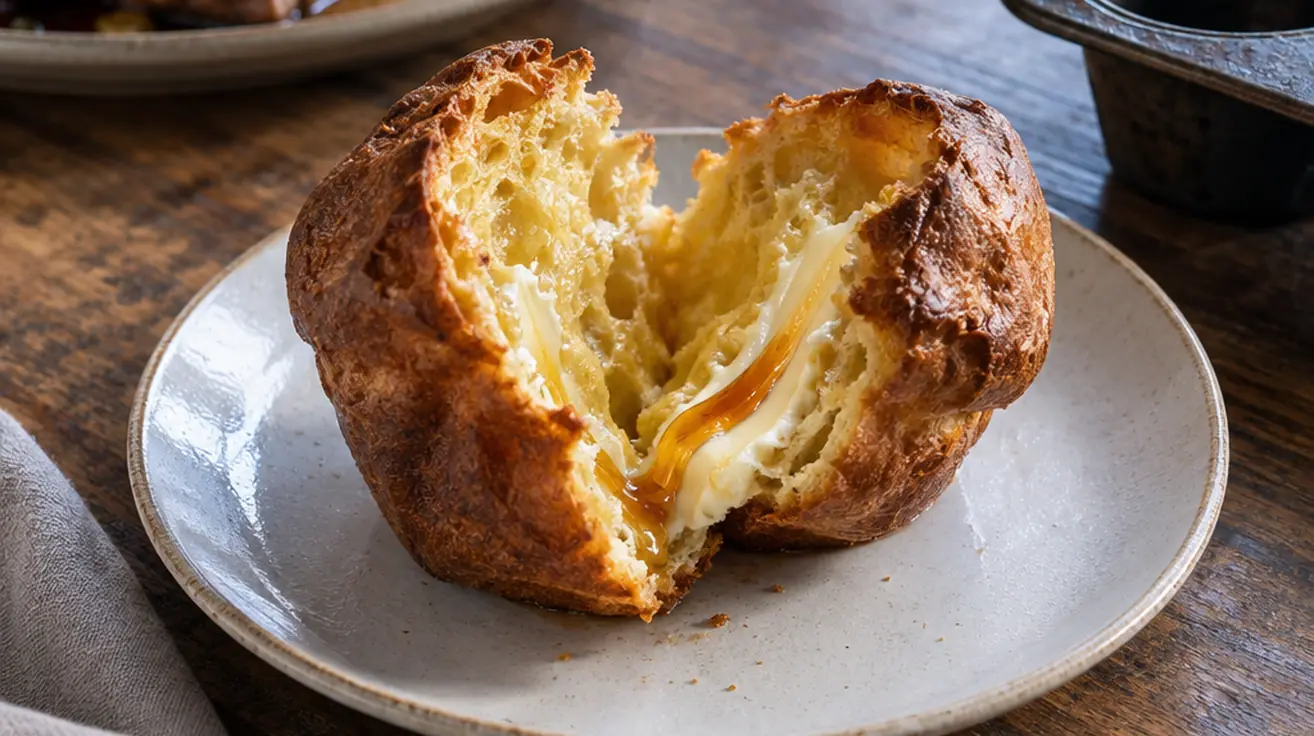
New England tables answered that dry inner wall with salted dairy fat and a trace of boiled maple sap. Spreading butter across the torn crumb replaces the missing pan drippings, while a light streak of maple plays against the charred, eggy exterior. That combination works only when the bread acts as a standalone opener rather than a sponge for roast gravy.
In a meat-centric Italian lunch progression, this dressed shell plays a tightly bounded role. A mid-day menu built around rich pasta and signature meats leaves no room for a heavy, sweet pastry masquerading as table bread. The popover tradition here functions as a brief, crisp opening beat: a hot shell dressed with enough salt to wake the appetite, eaten immediately, and cleared before the first savory course leaves the pass.
What Escaping Steam Does in the First Minute Out of the Tin
A popover's structure depends entirely on trapped steam holding up a thin, set crust. The second the cook unmolds the bake from its tin, internal vapor starts venting through the porous walls, and the hollow cavity loses thermal mass. Once that vapor leaves and the interior membrane cools, the custardy ribbons inside turn leathery, and neither fat nor syrup will cling where placed.
The working window at the pass is strict. You must split and dress the shell within about one minute of unmolding, while the inner wall still holds enough heat to liquefy soft fat on contact. Waiting even until the crust stops actively venting turns a glossy finish into a pooled mess at the bottom of the cup.
Dairy butter melts between 32 and 35 °C. Set a cold pat against a rapidly cooling inner wall and it sits there like candle wax, drawing heat out of the fragile egg webbing without coating it. Aerated, whipped butter that starts soft crosses that 32 to 35 °C threshold immediately on residual crust heat, relaxing into a thin, continuous glaze across the hot ridge.
Cold Cavity Trap
Never pour liquid maple into a cooling, collapsing cavity to compensate for lost steam. Without melted butter and high wall heat to hold it up, syrup runs straight to the base and forms a dense, sweet puddle.
Comparing a Whipped Salted Ribbon Against a Cold Pat
Dressing a fragile, steam-leavened wall requires covering wide surface area with minimal physical weight. Three different states of dairy fat behave differently when pressed against the hot interior membrane of a freshly split popover:
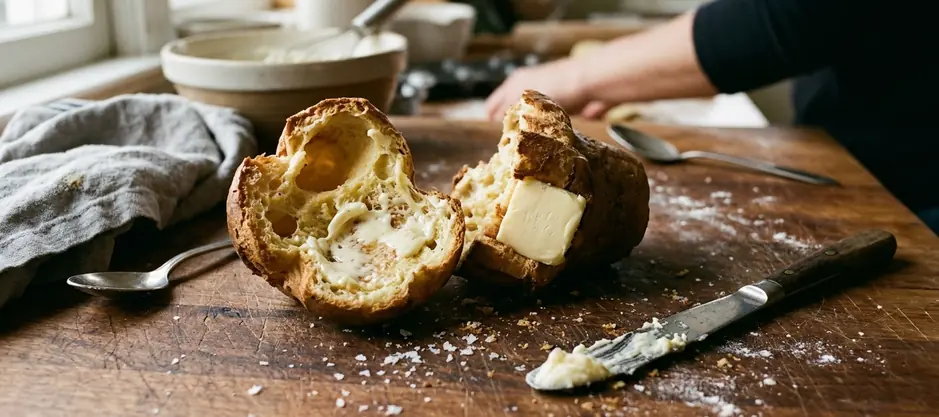
- A cold refrigerator pat: The rigid block tears through the delicate egg netting, absorbs heat in one localized spot, and remains partially unmelted while the rest of the crust goes dry.
- A softened solid block: Room-temperature solid butter smears more easily than a chilled pat, but its density deposits heavy grease in a single pool, weighing down the inner ridge and collapsing the air pockets.
- Whipped salted butter: Incorporating air into the fat beforehand expands its volume so a tiny mass coats the entire exposed wall, melting instantly at 32 to 35 °C into a sheer sheen without crushing the structure.
Salt inside that aerated fat acts as the culinary bridge toward the savory courses ahead. Sodium cuts through the maple sugar that follows, preventing the starter from reading as dessert and priming the tongue for browned meat fats and salted pan jus later in the meal. I prefer a sharp, flaky salt beat in the whip for this exact reason, as it keeps the palate alert for the heavier lunches that follow.
The optimal application uses roughly one teaspoon of whipped salted butter laid as a narrow ribbon right along the split inner wall. Keep the butter off the exterior crown, where it softens the crisp shell and leaves the diner's fingers greasy. If the whipped tub sits too long near the heat lamps on the station and slumps into a slack, weeping foam, re-whip it briefly to restore its structure before service so the ribbon holds its line instead of sliding off the crust.
Drawing Pure Maple Strictly Along the Butter Ribbon
The sweetener on a starter popover must be pure maple, plain boiled sap, with compounded or flavored pancake syrups kept off the station entirely. Imitation syrups carry heavy synthetic aromatics that cling to the roof of the mouth and shout over the meat courses that follow.
A heavy pour of sweetener collapses the hollow shell and loads the diner with sugar before savory food even arrives; a short, controlled thread of about a quarter to a half teaspoon, drawn strictly along the top of the butter ribbon, solves both problems. The melted fat acts as an emulsion bed that catches the syrup and suspends it along the vertical wall. Three ways to finish a split crust before pasta service:
- Salted butter alone: Coats the dry crumb with needed dairy fat and salt, but leaves the neutral, drippings-free batter shell tasting plain.
- Pure maple on bare crust: Soaks straight into the unprotected cellular crumb, turning the interior gummy and reading like candy on the tongue.
- A maple thread of approximately 0.25 to 0.5 teaspoon over the butter ribbon: Suspends the boiled sap on the salted fat layer, balancing salt, fat, and sugar across the wall without dulling the appetite for savory sauces.
This exact layering ratio holds only for pure boiled maple sap, since thick, artificially flavored table syrups refuse to sit cleanly on the dairy fat and linger too heavily against meat jus. Keep the maple vessel at ambient kitchen temperature during the rush. Chilled syrup from the walk-in beads up on the butter and refuses to draw into a line, whereas hot syrup runs too thin and floods straight into the hollow base.
Clearing the Popover Plate Before Pasta and Stopping Refills
A dressed popover at lunch is not a continuous bread basket meant to camp on the tablecloth through the meal. Treating it as an all-meal accompaniment creates an immediate collision on the table: a second round sent out after the kitchen fires the pasta stalls the dining room turn and puts residual maple syrup directly against savory sauce.
Pacing the floor means treating the split, glossy shell as a single, self-contained opening beat. Floor staff need to clear the popover plates and sweep any sweet crumbs before the pasta bowls land. That clean break ensures pure maple never shares a fork or a palate with bright tomato acidity, aged grated cheese, or a slow-simmered meat ragu.
Pasta Pass Cutoff
Once a table's pasta or meat course is actively working on the pass, halt all popover refills for those covers, even if a kitchen delay tempts the floor to send extra bread.
Run the refill cadence as a fixed operational rule across the lunch rush. Serve one fresh, hot popover per cover as the opening move, authorize an immediate replacement only if a shell reaches the table cold or unsplit, and shut down popover service for that table the moment savory firing begins. Whether diners are ordering quick pasta lunches or settling in for full multi-course sets with signature meats, that hard stop keeps the table moving and protects the flavor profile of the kitchen's main work.
Split, Ribbon, Thread, Then Send the Plate
Execute the pass sequence as four continuous motions the second the bake leaves the tin:
- Split the steam seam: Break the crust open along its natural vent line within one minute of unmolding while visible vapor still rises from the center.
- Lay the salted ribbon: Draw one teaspoon of structured, whipped salted butter along the hot inner wall so it glazes at 32 to 35 °C.
- Trace the maple thread: Run a quarter to a half teaspoon of room-temperature pure maple directly atop that butter stripe, keeping it off the bare crumb.
- Send the plate immediately: Run the dressed popover to the table before the exterior crust dulls or loses its crisp snap.
Watch the interior steam when you crack the shell. If the center no longer vents vapor and feels dry to the touch, discard the dead shell and pull a fresh bake from the tin rather than pouring on extra maple to rescue it. Once that single hot plate lands on the table, hold all further popovers so the diner moves straight into pasta, and then meat, with a clean palate sharpened by salt and only a fleeting trace of sweetness.